

Refrigerator Frost and Defrost Problems: 5 Frost Patterns, 6 Causes and 5 Thaw Steps
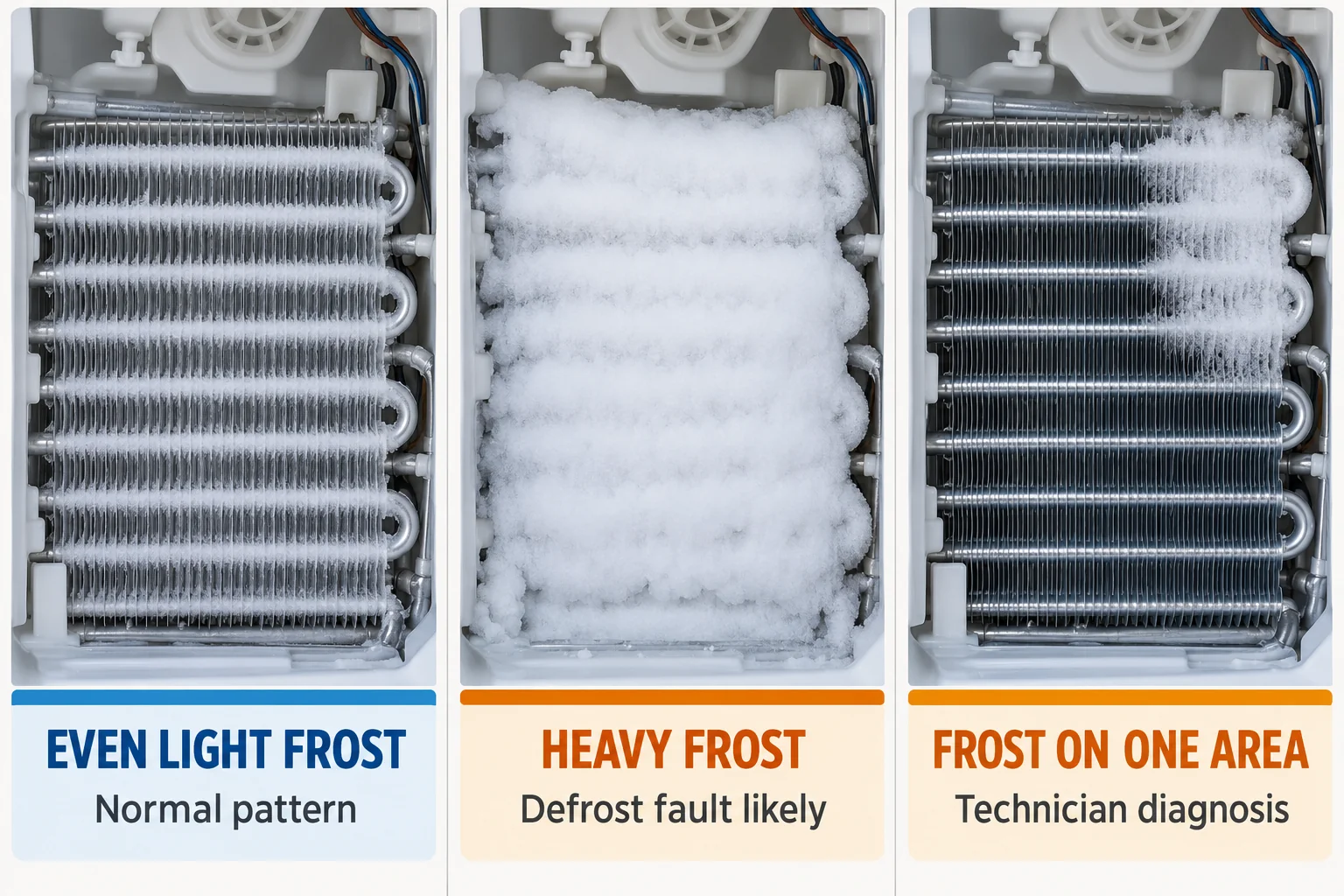
Where Is the Frost, and What Does It Tell You?
The location of the frost points to its cause, because defrost failures frost the freezer back wall while door seal leaks frost the edges. A frost-free refrigerator should not build thick frost on the freezer back wall. The table below matches five frost locations to their likely causes.
| Where the frost forms | What it indicates |
|---|---|
| Back wall of the freezer | Defrost system failure |
| Along the door seals | Door seal leak |
| On frozen food and packaging | Warm air entering or temperature swings |
| Ice on the freezer floor or in front of the drain | Clogged defrost drain |
| Back wall of the refrigerator section | Airflow or drain fault |
Frost in more than one location can have more than one cause. If the refrigerator is also warm, read refrigerator not cooling.
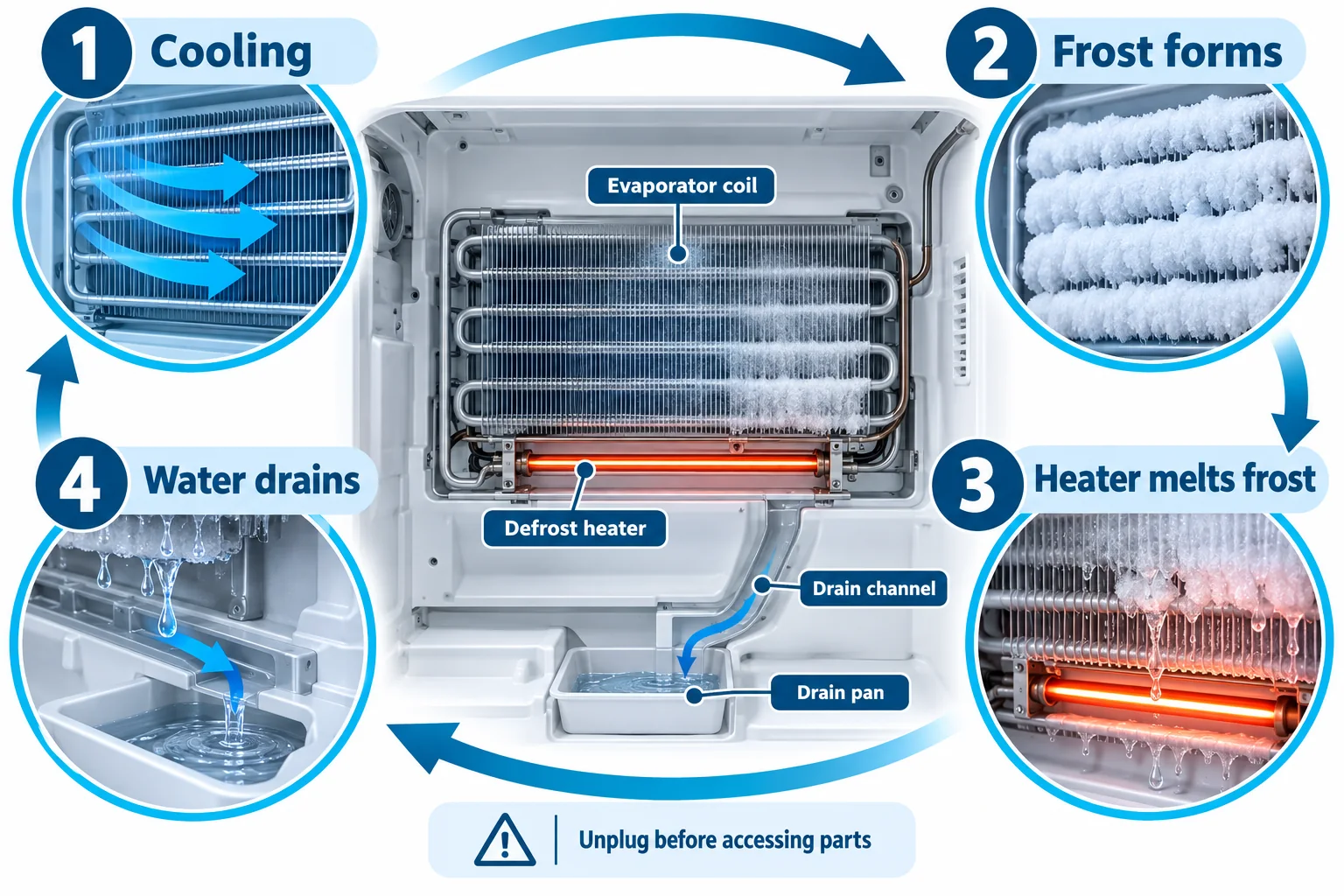
How Does a Frost-Free Defrost Cycle Work?
A frost-free defrost cycle melts frost from the evaporator coils with a heater at set intervals and drains the water out of the cabinet. Four parts run the cycle. The defrost timer or control board starts each cycle. The defrost heater melts the frost. The defrost thermostat ends the heating when the coils are clear. The defrost drain carries the meltwater to a pan under the unit. The cooling cycle that surrounds this process is explained in how a refrigerator cools.
What Should You Check First When Frost Builds Up?
Five first checks resolve many frost complaints before any part is replaced.
Safety notice: Unplug the refrigerator before touching any part behind a panel. Stop at the checks below. Electrical testing, refrigerant handling and sealed-system work belong to a technician.
- Confirm that both doors close fully and that nothing blocks the seals.
- Clear the air vents in the freezer and the refrigerator.
- Remove overpacked items so that air can circulate.
- Recall any recent warm load, such as groceries or a long door opening.
- Note high room humidity, which adds moisture and frost.
Inspect the seals as described in refrigerator door seal and gasket. Record each result, because the pattern identifies the cause in the next section.
Which Part Has Failed?
The frost pattern and the result of a full thaw identify the failed part. The table below matches six causes to their patterns, tests and difficulty. Test the parts in order, and test each later part only after the earlier parts pass.
| Frost pattern | Likely cause | Test | Difficulty |
|---|---|---|---|
| Thick frost on the freezer back wall, cooling returns after a thaw | Defrost heater | Continuity test with a meter | Moderate |
| Same pattern, heater passes | Defrost thermostat | Continuity test with a meter | Moderate |
| Same pattern, both parts pass | Defrost timer or control board | Technician diagnosis | Technician-assisted |
| Frost along the door seals and on food | Door seal leak | Paper strip test | Easy to moderate |
| Frost near blocked vents or in a humid room | Blocked airflow or humidity | Clear vents, reduce door openings | Easy |
| Ice on the freezer floor or in front of the drain | Clogged defrost drain | Flush the drain with warm water | Easy to moderate |
The heater tests are in refrigerator defrost heater. The drain steps are in refrigerator clogged defrost drain.
How does a full thaw test the defrost system?
A full thaw clears all frost, and cooling that returns and then fades again points to a defrost part, not to a sealed-system fault. Record how long the cooling lasts, because the technician uses the interval.
How Do You Thaw and Clear Frost Safely?
Unplug the refrigerator, protect the food and let the ice melt on its own, because sharp tools can puncture the coils. Follow the five steps below.
- Move perishable food into coolers with ice.
- Unplug the refrigerator and leave the doors open.
- Lay towels and a shallow pan under the unit to catch meltwater.
- Wait until all ice has melted, wiping water as it forms.
- Dry the interior and the drain area, plug the unit in and restore the settings.
Never chip ice with a knife or a screwdriver. Units without a frost-free system need this manual defrost at regular intervals, and the manual states the interval. The hold times for the food are in how long food stays safe in a refrigerator without power.
How Do You Test and Replace Defrost Parts?
A technician tests the defrost heater, the defrost thermostat and the timer or control board for continuity, and each failed part is replaced. Disconnect power before any test.
How is the defrost heater tested and replaced?
The heater is tested first, because a burned-out heater cannot melt the frost. Remove the freezer back panel to reach the coils. Disconnect the heater leads and test for continuity with a meter. Replace a heater that fails the test. Difficulty: moderate. The full procedure is in test the refrigerator defrost heater.
How is the defrost thermostat tested and replaced?
The defrost thermostat is tested second, against the manufacturer specification. The part sits on or near the coils. Replace a thermostat that fails the test. Difficulty: moderate.
How are the timer and the control board tested?
The timer or control board is tested last, only after the heater and the thermostat pass. A technician diagnoses the part. Replace the timer or board only after the technician confirms the fault. Difficulty: technician-assisted.
Why Does Frost Keep Coming Back?
Frost returns when moisture keeps entering the cabinet or the defrost cycle does not clear the coils. Four causes feed the problem:
- A leaking door seal, checked with the paper strip test in check the refrigerator door seal
- Long door openings and warm loads
- High room humidity
- Constant running, which signals a deeper fault, as explained in refrigerator running constantly
When Is It a Bigger Problem?
Persistent freeze-up after replacing the defrost parts points to an airflow or sealed-system fault that needs a technician. Refrigerant handling requires EPA Section 608 certification. Never vent refrigerant, add refrigerant or cut refrigerant lines. The signs are in refrigerator compressor problems. The line between home work and technician work is explained in refrigerator repair: DIY or professional.
What Do People Also Ask About Refrigerator Frost and Defrost Problems?
Why is there frost on my frozen food?
Warm air entering through a leaking door seal or long door openings freezes moisture onto food and packaging.
Why is there ice on the back wall of my refrigerator?
Ice on the refrigerator back wall points to an airflow or drain fault, so clear the vents and check the defrost drain.
Why did frost build up after a power outage?
An outage can leave water and warm air in the cabinet, which refreezes as frost, so thaw and dry the unit and recheck. Check the food as explained in how long food stays safe in a refrigerator without power.
Is It Worth Repairing a Refrigerator With Frost and Defrost Problems?
Repair suits a failed defrost part on a younger refrigerator, and replacement suits repeated failures on an older one. Age, the cost of parts and labor, and the number of repeat failures decide the outcome. Replace the refrigerator when the repair quote approaches the price of a comparable new unit. The full method is in repair or replace a refrigerator. Cost drivers are listed in refrigerator repair cost.
Related refrigerator guides
US and UK refrigerant-work boundary
Home diagnosis must stop before opening, cutting or tapping the sealed refrigerant circuit. In the US, EPA Section 608 certification is required for work that could release refrigerant. In the UK, work on equipment containing F-gas requires the relevant qualification. Refrigerant type and local rules vary, so use a qualified refrigeration technician for sealed-system work.