
Refrigerator Defrost Drain Clog: 5 Signs, 4 Look-Alike Faults and 6 Clearing Steps
What Does the Defrost Drain Do?
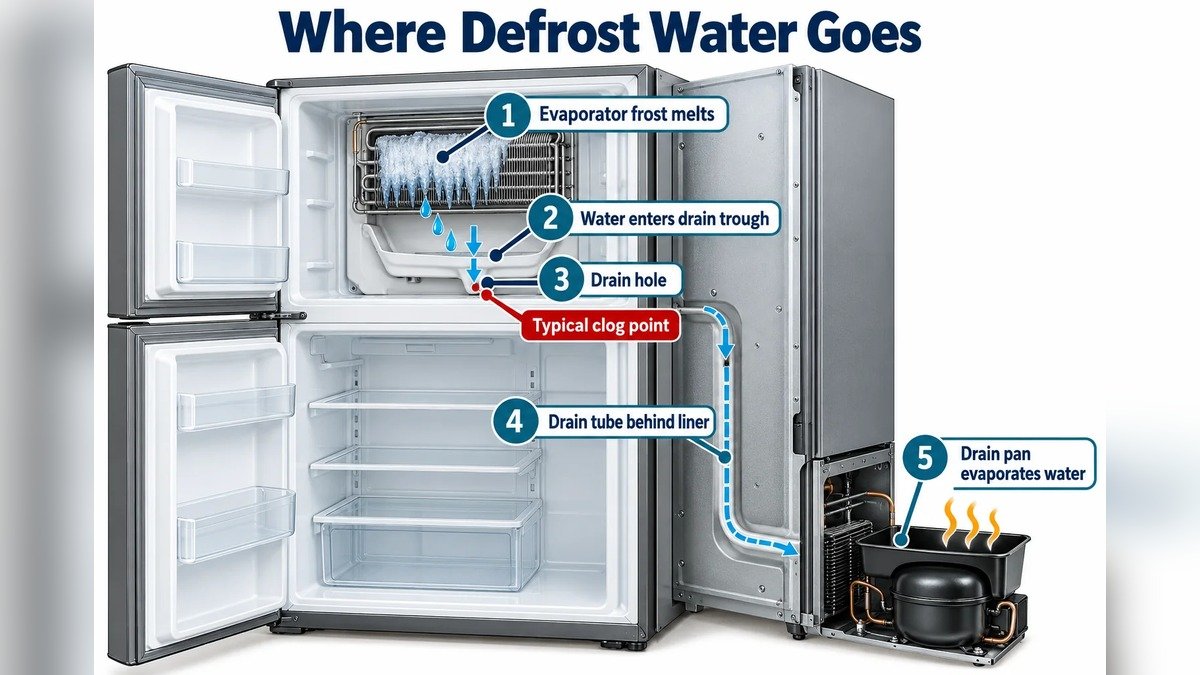
The defrost drain carries meltwater from the evaporator coil to a pan under the refrigerator, where the water evaporates. A frost-free refrigerator warms the evaporator coil at intervals with the defrost heater, and the melted frost runs into a trough, down a drain tube and into the pan near the compressor. A clog stops that flow, so the water freezes in the drain or spills, and spilled water is one source of the leaks covered in refrigerator leaking water. The drain is one part of the defrost system, which is covered in refrigerator frost and defrost problems. Some models, including many small refrigerators, drain differently, so follow the manual for yours.
What Are the Signs of a Clogged Defrost Drain?
Five signs point to a clogged defrost drain.
- Water pooling at the bottom of the refrigerator compartment
- Ice building on the freezer floor or the back wall
- Water on the floor in front of or under the refrigerator
- A musty or sour smell at the back of the freezer or under the unit
- Weak cooling with frost on the back panel
Several of these signs also come from other faults, so rule those out first.
Why does water pool in the refrigerator compartment?
Water pools in the refrigerator compartment because a blocked drain makes meltwater back up, overflow the trough and run down the rear wall. The water often appears as a puddle under the crisper drawers or as a sheet of ice at the rear of the freezer.
Can a clogged drain cause weak cooling?
Yes. Ice from a blocked drain can cover the evaporator coil and block airflow, which weakens cooling in both compartments. Cooling faults have other causes as well, so confirm the ice or the water at the drain before you blame it.
What Causes a Defrost Drain to Clog?
Food debris, mineral residue and ice are the common causes of a clogged defrost drain. Melting frost carries crumbs, spilled food and packaging fragments into the trough, and these settle in the narrow drain tube. They bind with mineral residue and mold into a plug. Once the flow slows, the water refreezes in the drain, and the ice grows until the drain is blocked. A tube that is kinked, loose or misaligned after a repair or a move causes the same blockage.
What Else Looks Like a Clogged Defrost Drain?
Four other faults mimic a clogged defrost drain, so rule them out before you open the freezer panel.
- A leaking water inlet valve or fill tube, as explained in refrigerator leaking water
- A failed defrost heater that lets frost build on the coil, as explained in refrigerator frost and defrost problems
- A worn door seal that lets humid air in
- A refrigerator that is not level, which can send water toward the front
Water that appears only near the ice maker or the dispenser points to the inlet valve. Frost across the whole coil, not only near the drain, points to the heater. Frost near the door opening points to a worn seal. Ice at the back wall with debris at the drain opening points to the clog.
How Do You Clear a Clogged Defrost Drain?
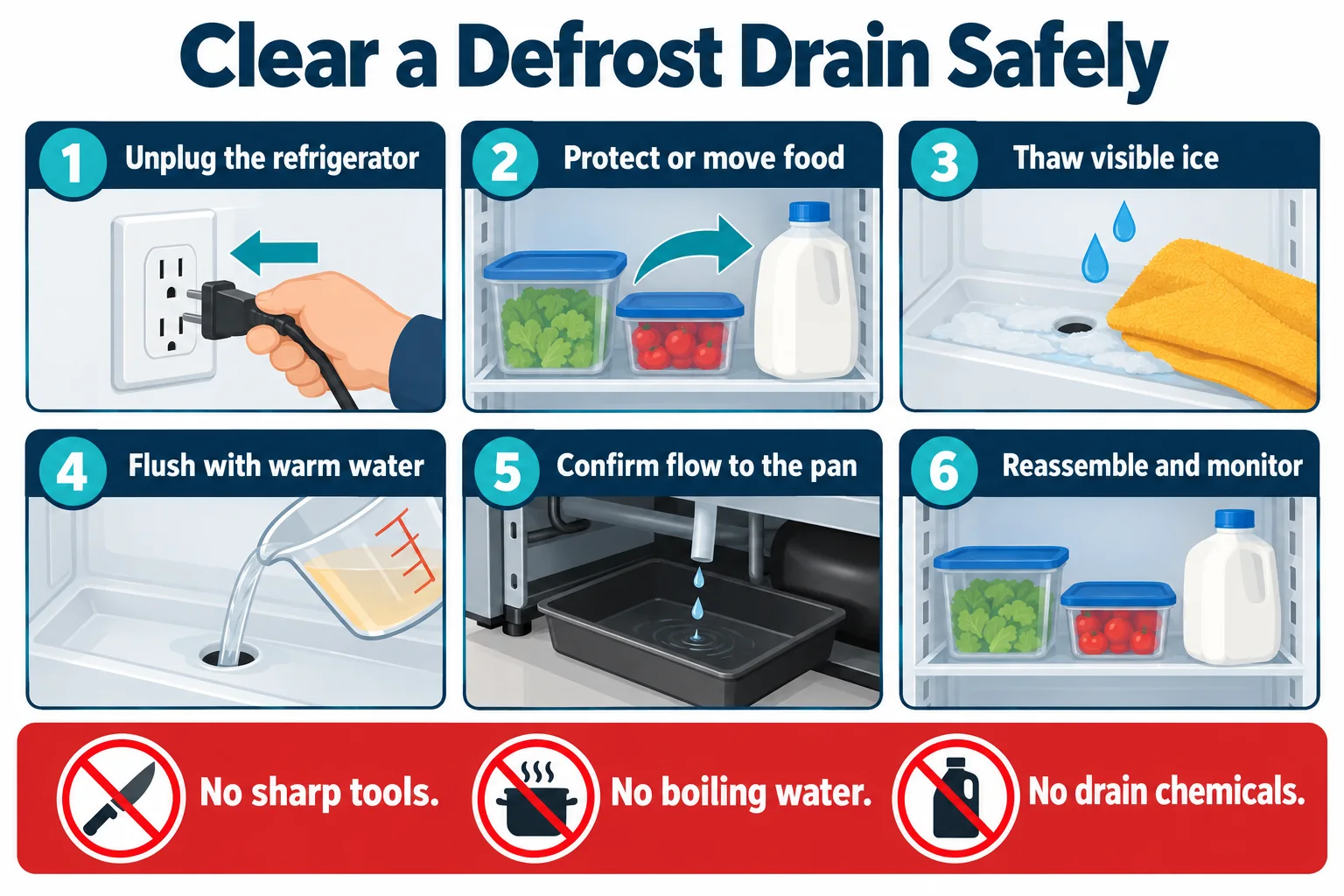
Unplug the refrigerator, thaw the ice, remove debris from the drain opening and flush it with warm water until it runs freely.
Safety notice: Unplug the refrigerator before touching any part behind a panel. Never chip ice with a pick, knife or screwdriver, and never use a heat gun or open flame near the evaporator coil. Refrigerant handling and sealed-system work belong to a technician.
Six steps clear the drain:
- Unplug the refrigerator, move the frozen food to a cooler and lay towels on the floor.
- Remove the freezer shelves and drawers, then the rear panel over the evaporator, following the manual for the screws and clips.
- Let the ice around the drain thaw with the doors open, and mop up the meltwater.
- Find the drain opening below the evaporator coil and pull out debris with a flexible nylon brush or a pipe cleaner.
- Flush the drain with warm water from a turkey baster until the water runs freely into the drain pan.
- Clean the drain pan, refit the panel, shelves and drawers, plug in the refrigerator and watch for ice or water over the following days.
Photograph the screws, the clips and any wiring before you remove anything. Use warm water, not boiling water, because boiling water can warp the plastic. Wipe the compartment dry before you plug in the refrigerator, because leftover water refreezes. Do not disconnect wiring on the evaporator cover without the manual. Difficulty: moderate.
How Do You Deal With Drain Pan Water and Odor?
Empty and wash the drain pan with warm water and mild soap, because odor comes from standing water and food residue. The drain pan sits near the compressor, behind the lower grille or at the rear of the unit, and the manual shows the access. Unplug the refrigerator before you remove the grille. Slide the pan out if it is removable, empty it, wash it and let it dry. A cracked or misplaced pan lets water reach the floor, so reseat or replace it. Deodorizers hide the smell and do not remove the cause.
How Do You Prevent a Defrost Drain Clog?
Keep loose food debris out of the freezer, keep the door sealed and flush the drain during regular cleaning. Wipe spills in the freezer, close open packages and keep food away from the back wall where the meltwater and the airflow pass. A worn door seal brings humid air and more frost, so replace a worn seal. Check that the refrigerator is level as the manual directs and that the drain pan sits in place. Use only warm water and mild soap when you flush the drain.
When Should You Call a Technician?

Call a technician when ice returns after clearing, water keeps appearing, the panel will not come off safely or you see a damaged line. Ice that returns soon after clearing points to a heater, sensor, control or sealed-system fault, as explained in refrigerator frost and defrost problems. Stop and unplug the refrigerator if you see an oily residue or a damaged line near the coil. Ask for a written quote that separates the diagnosis from the labor. Note where the water and the ice appear and when they return, because the technician uses the record to skip repeated tests.
What Do People Also Ask About a Refrigerator Defrost Drain?
How do I know if my refrigerator defrost drain is clogged?
Water pooling in the refrigerator compartment, ice at the back of the freezer or a puddle under the unit points to a clogged drain.
Can I unclog a refrigerator defrost drain myself?
Yes. Clearing a defrost drain is a moderate DIY job when you unplug the unit, avoid sharp tools and stop at any sealed-system part.
What can I pour down a refrigerator defrost drain?
Pour warm water, with a little mild soap if needed, and avoid boiling water, bleach and harsh drain cleaners.
Why does my refrigerator drain keep freezing?
A drain that freezes again soon after clearing points to a defrost heater, sensor or control fault that a technician should test.
Why does water leak under my refrigerator?
A cracked drain pan, a clogged defrost drain or a leaking inlet valve can put water under a refrigerator, as explained in refrigerator leaking water.

Hi, I’m Ryan, a refrigeration engineer based in the UK Midlands. I’m passionate about engineering, technology, and understanding how things work, especially when it comes to heating, ventilation, air conditioning, and refrigeration systems.
I enjoy the hands-on side of engineering, from working with technical equipment to exploring practical solutions to everyday challenges. For me, engineering is more than just a profession; it’s about problem-solving, continuous learning, and developing valuable technical skills.
I also enjoy sharing glimpses of the engineering world through my Instagram page, @hvac.razza, where I showcase tools, equipment, and aspects of HVAC work.
Outside the technical side of things, I value genuine connections, meaningful conversations, and opportunities to learn from others. I’m always interested in connecting with people who share an appreciation for technology, practical skills, and personal growth.