
Refrigerator Freezer Not Freezing: 5 First Checks, 7 Causes and When to Call a Technician
What Does a Refrigerator Freezer Not Freezing Mean?
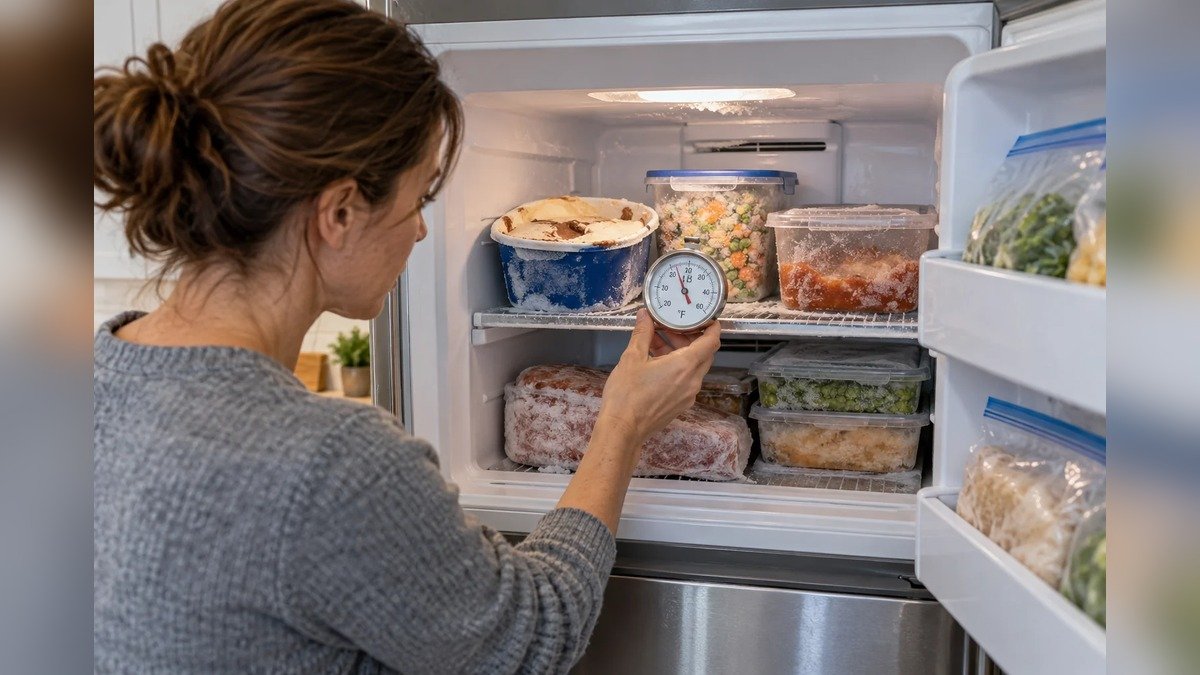
A refrigerator freezer is not freezing when the compartment stays above 0°F, the temperature the USDA recommends for frozen food. The signs are soft ice cream, partly thawed vegetables and melting ice cubes. The refrigerator section often stays cold while the freezer warms. If the refrigerator is warm as well, read refrigerator not cooling.
What if the freezer was working and then stopped?
A sudden stop usually points to a failed part, and a gradual decline usually points to frost build-up or a worn door seal.
What if the freezer is warm after a power outage or a move?
A freezer needs time to return to temperature after an outage or a move. Follow the settling time in the manufacturer manual before testing.
What Should You Check First When a Freezer Is Not Freezing?
Five first checks resolve many freezer complaints before any part is replaced.
Safety notice: Unplug the refrigerator before touching any part behind a panel. Stop at the checks below. Electrical testing, refrigerant handling and sealed-system work belong to a technician.
- Verify the freezer temperature setting against the manual.
- Confirm that the freezer door closes fully and that the seal is clean.
- Clear the freezer vents and remove overpacked items.
- Turn off demo mode or any display-only mode, which brands name differently.
- Read a freezer thermometer after the doors have stayed closed for several hours.
Keep the freezer door closed and group frozen items together while testing. A full freezer holds its temperature longer, as explained in refrigerator freezer hold time without power.
Is the Refrigerator Side Still Cold?
A cold refrigerator with a warm freezer points to a freezer airflow, defrost or control fault. A warm refrigerator as well points to the causes in refrigerator not cooling. The table below matches four patterns to their likely causes, which are explained in the following sections.
| Observation | Likely cause |
|---|---|
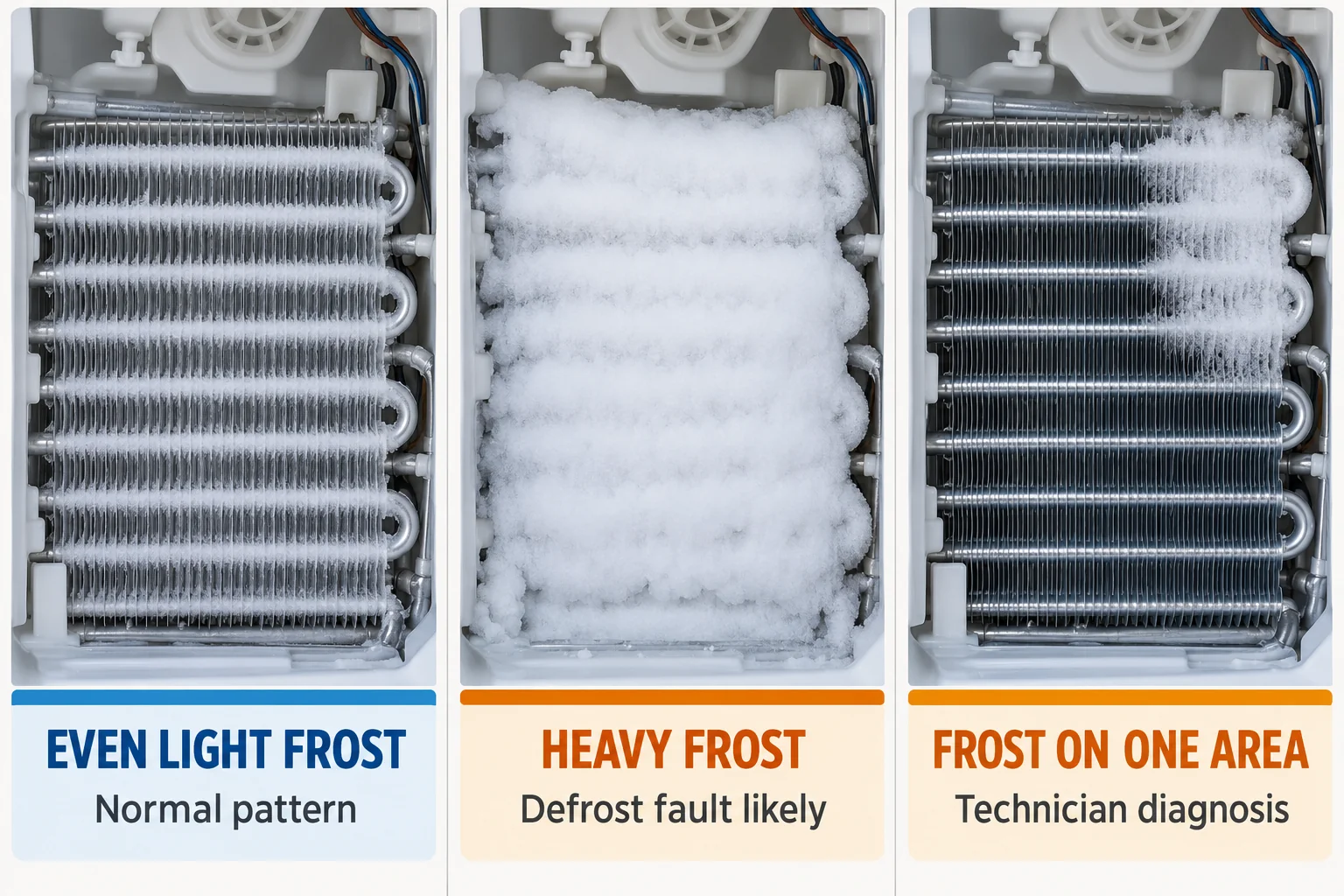
| Refrigerator cold, freezer warm, thick frost on the freezer back wall | Defrost system |
| Refrigerator cold, freezer warm, no fan sound behind the freezer panel | Evaporator fan |
| Refrigerator colder than usual, freezer warm | Stuck damper |
| Temperatures swing between days | Temperature control, sensor or control board |
Patterns can overlap, so confirm a cause with the tests before buying a part.
Is the Evaporator Fan Failing?
A failed evaporator fan stops cold air from circulating, so the freezer warms while the coils stay cold or frosted. Signs include no airflow at the freezer vents, a squealing or rattling fan and ice around the fan blades.
Where is the evaporator fan?
The evaporator fan sits behind the freezer back panel, close to the evaporator coils. The manual shows how to remove the panel.
What are the signs of a failing fan motor?
A failing fan motor squeals, rattles or runs slowly before it stops. Listen for the fan behind the freezer back panel while the compressor runs. Silence points to the fan or its circuit.
How is the fan tested and replaced?
With the unit unplugged, confirm that the blades turn freely by hand, and a technician tests the motor circuit with a meter. Remove any ice or debris that blocks the blades. Replace a motor that stays seized or silent after the obstruction is cleared. Difficulty: moderate. Details are in refrigerator fan motors.
Is the Defrost System Failing?
A failed defrost system lets frost build on the evaporator coils until it blocks the airflow that cools the freezer. Signs include frost on the freezer back wall and cooling that returns after a thaw and then fades again.
What are the defrost parts?
The defrost system uses a heater, a defrost thermostat and a timer or control board. The heater melts frost from the coils, the thermostat ends the heating and the timer or board starts each cycle.
How is the defrost system tested?
A full manual thaw with the unit unplugged tests the theory, and a technician tests each defrost part for continuity with a meter. Replace the failed defrost part after testing. Difficulty: moderate. The tests for the heater are in refrigerator defrost heater. The full chain of causes is in refrigerator frost and defrost problems.
Is the Damper or the Temperature Control at Fault?
A stuck damper or a faulty temperature control sends the wrong amount of cold air to the freezer. Both parts regulate how long cooling runs and where the air goes. Difficulty: moderate for both. The guide in refrigerator thermostat, thermistor and damper problems covers the two parts together.
Is the damper stuck?
A damper stuck open sends too much cold air to the refrigerator and too little to the freezer in many frost-free models. Ice and debris, for example, can jam the damper flap. Clear the vents and inspect for blockages. Replace a damper that stays open or is cracked.
Is the thermostat faulty?
A faulty thermostat stops the compressor or fans from running long enough to cool the freezer. Compare the thermometer reading with the dial setting. A technician confirms the part with a meter and the manufacturer specifications.
Is the Temperature Sensor or the Control Board Failing?
A failing sensor or control board stops cooling early or at the wrong time, so the freezer warms. Rule out power, settings and demo mode first.
Is the temperature sensor failing?
A failing temperature sensor reports the wrong freezer temperature, so the board ends cooling too early. A technician measures the sensor resistance and compares it with the manufacturer specification. Replace the sensor if the reading is outside the specification. Difficulty: moderate.
Is the control board failing?
A failing control board causes dead displays, random cycling or no cooling when every other part works. A power reset clears some temporary faults. Replace the board only after a technician confirms the fault. Difficulty: technician-assisted. Signs and options are in refrigerator control board failure signs.
Which Freezer Fixes Can You Do at Home?
Four fixes can be done at home, and each depends on the cause. The table below lists each fix with its difficulty and the cause it addresses.
| Fix | Difficulty | Addresses |
|---|---|---|
| Clear vents and remove overpacked items | Easy | Blocked airflow |
| Clean or replace the freezer door seal | Easy to moderate | Warm air leaking in |
| Thaw the freezer fully with the unit unplugged | Easy | Frost build-up |
| Replace a fan motor, heater or damper | Moderate | Failed parts |
Replace a part only after a test confirms the fault. The same parts also cause cooling faults in the refrigerator section, as explained in refrigerator fan motors.
When Does a Freezer Need a Technician or Replacement?
A sealed-system fault, a failed compressor or repeated board failures need a technician, and repair cost against refrigerator age decides replacement. The sealed-system fault is the technician-only cause. Refrigerant handling requires EPA Section 608 certification. Never vent refrigerant, add refrigerant or cut refrigerant lines. Call a technician if the refrigerator and the freezer are both warm and the fan and defrost checks are clear. Difficulty: technician-only.
What Do People Also Ask About a Refrigerator Freezer Not Freezing?
Why is my freezer not freezing but my refrigerator is cold?
A frosted evaporator, a failed evaporator fan or a stuck damper usually stops cold air from reaching the freezer.
Why is my freezer warm and frosted at the back?
A failed defrost heater, defrost thermostat or defrost control lets frost block the airflow.
Can I refreeze food that thawed in a freezer that stopped freezing?
Thawed food can be refrozen if it still has ice crystals or is at or below 40°F.
What temperature should a freezer be?
The USDA recommends 0°F or below for the freezer.
Can a freezer that is not freezing be fixed without a technician?
Vents, door seals, manual defrost and fan obstructions can be handled at home, but sealed-system faults cannot.
Related refrigerator guides
US and UK refrigerant-work boundary
Home diagnosis must stop before opening, cutting or tapping the sealed refrigerant circuit. In the US, EPA Section 608 certification is required for work that could release refrigerant. In the UK, work on equipment containing F-gas requires the relevant qualification. Refrigerant type and local rules vary, so use a qualified refrigeration technician for sealed-system work.

Hi, I’m Ryan, a refrigeration engineer based in the UK Midlands. I’m passionate about engineering, technology, and understanding how things work, especially when it comes to heating, ventilation, air conditioning, and refrigeration systems.
I enjoy the hands-on side of engineering, from working with technical equipment to exploring practical solutions to everyday challenges. For me, engineering is more than just a profession; it’s about problem-solving, continuous learning, and developing valuable technical skills.
I also enjoy sharing glimpses of the engineering world through my Instagram page, @hvac.razza, where I showcase tools, equipment, and aspects of HVAC work.
Outside the technical side of things, I value genuine connections, meaningful conversations, and opportunities to learn from others. I’m always interested in connecting with people who share an appreciation for technology, practical skills, and personal growth.