
Refrigerator Too Cold and Freezing Food: Causes and Fixes
How Cold Is Too Cold for a Refrigerator?
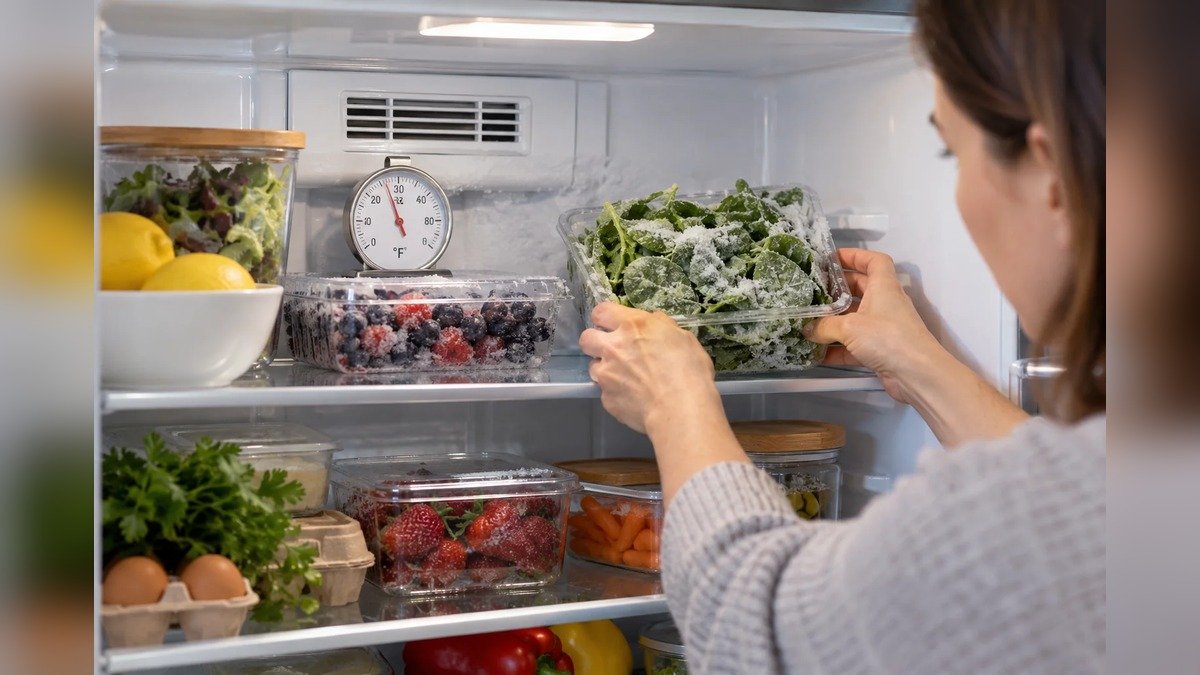
A refrigerator is too cold when food or drinks freeze, which happens as the fresh-food section approaches 32°F, the freezing point of water. The USDA recommends 40°F or below, so a reading near 32°F is colder than food safety requires. Examples of over-cooling include frozen lettuce, slushy drinks, ice crystals on yogurt and cracked eggs. If the refrigerator is too warm instead, read refrigerator not cooling.
How do you tell uniform over-cooling from cold spots?
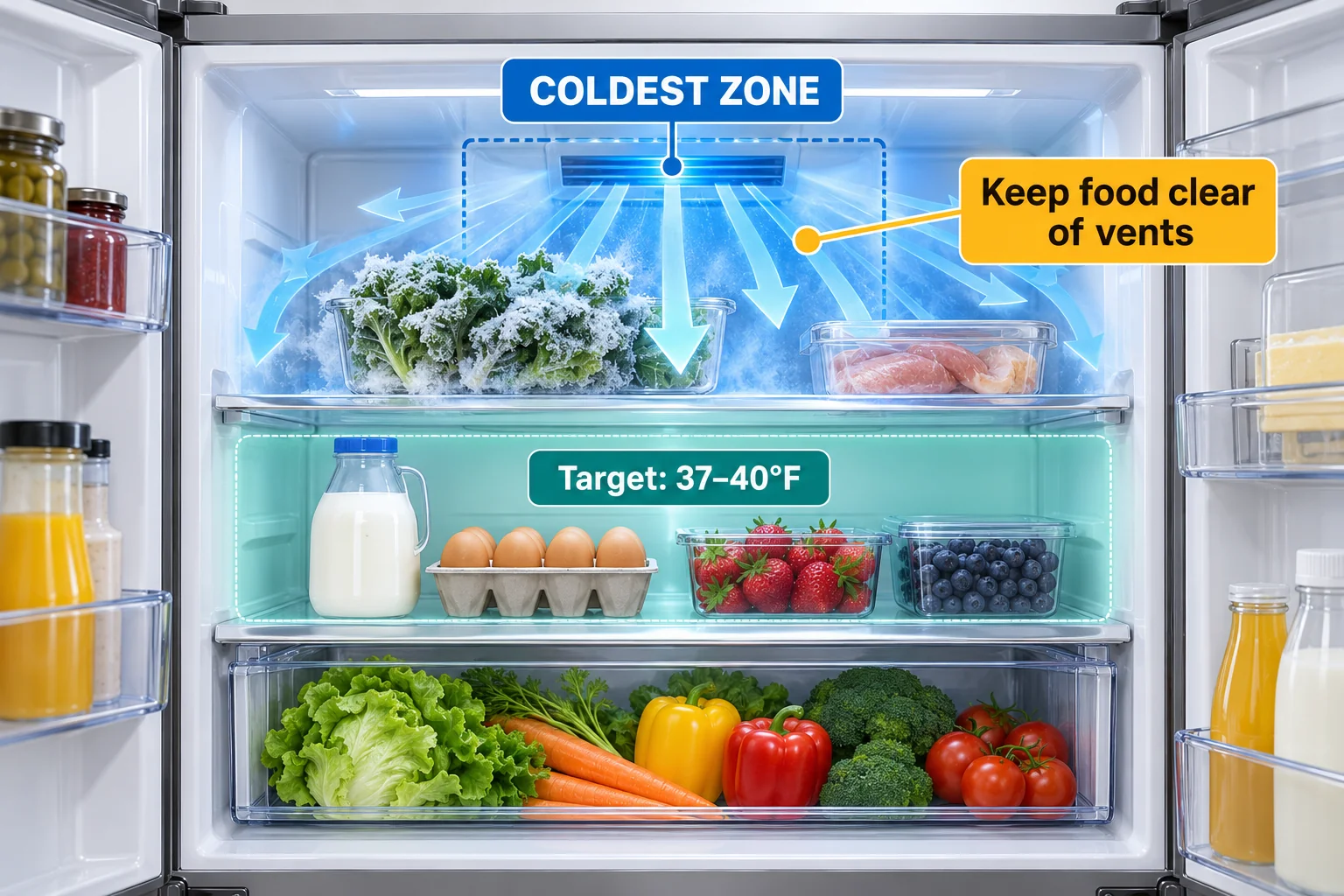
Uniform over-cooling affects every shelf and points to the setting, the sensor or the thermostat, while cold spots near the vents point to food placement or the damper. Check several shelves with one thermometer before choosing a cause.
What if the refrigerator is new or the setting was just changed?
A new unit or a recent setting change needs the settling time stated in the manual before the temperature is judged. Record the change and the time.
What Should You Check First When a Refrigerator Is Too Cold?
Five first checks resolve many over-cooling complaints before any part is replaced.
Safety notice: Unplug the refrigerator before touching any part behind a panel. Stop at the checks below. Electrical testing, refrigerant handling and sealed-system work belong to a technician.
- Compare the dial or panel setting with the setting recommended in the manual.
- Move food and drinks away from the air vents and the back wall.
- Remove overpacked items so that air can circulate between shelves.
- Turn off quick-cool, express-cool or turbo modes, which brands name differently.
- Read an appliance thermometer on a middle shelf after the doors have stayed closed for the settling time stated in the manual.
Dial numbers differ by brand, so the manual states whether a higher number is colder or warmer. Raise the setting by one step if the thermometer reads too cold, then wait for the settling time before judging. The ideal refrigerator temperature settings explain the correct setpoints.
Is the Damper Stuck Open?
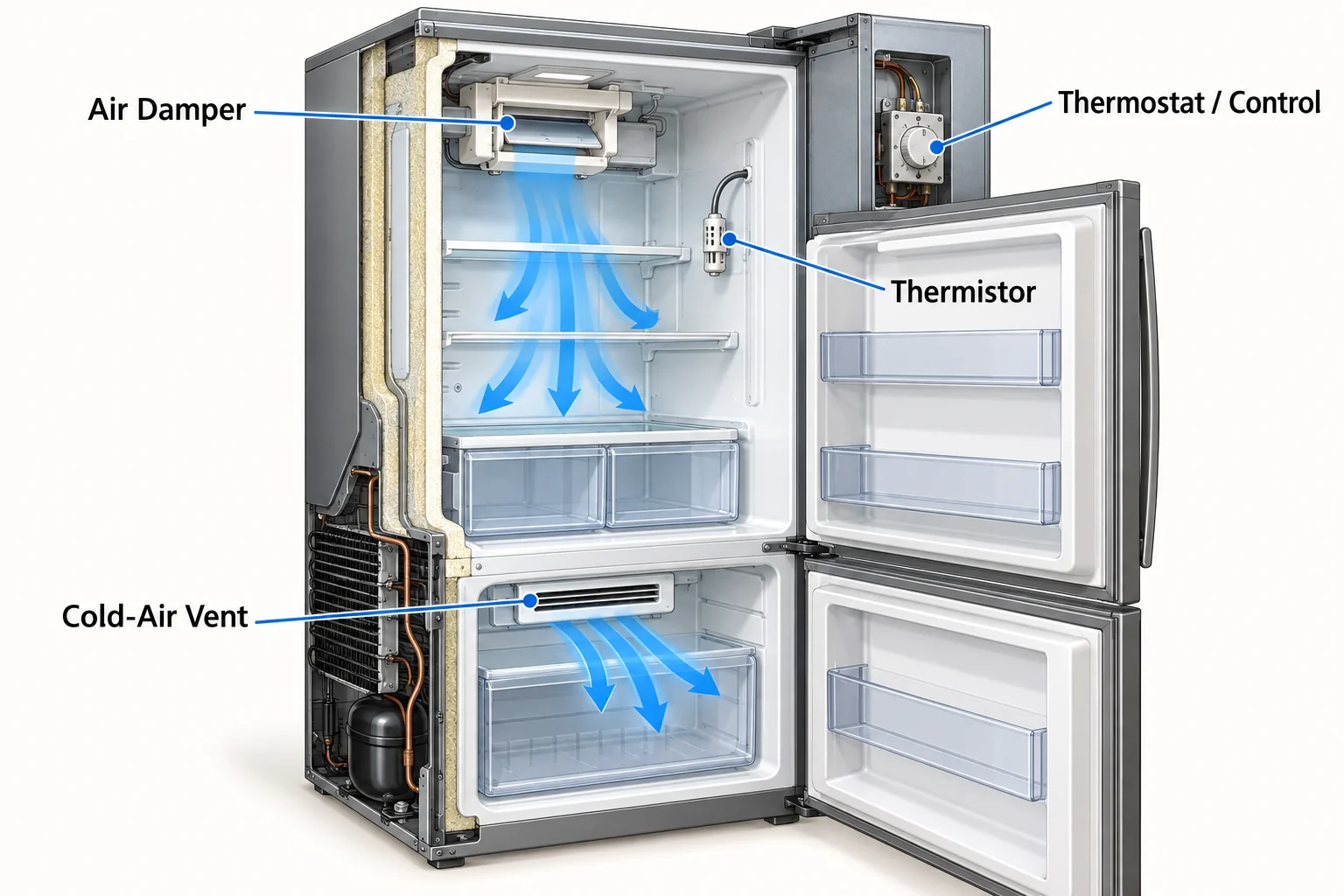
A damper stuck open sends too much cold air into the refrigerator section, which freezes items near the vents. In many frost-free models, the damper is a flap in the air duct between the freezer and the refrigerator. Some models use a mechanical flap, and others use an electronic damper with a small motor. The signs are a normal freezer, a refrigerator that is too cold and ice near the vents. Inspect the damper for ice, debris or cracks with the unit unplugged, using the parts diagram in the manual. Clear ice or debris that holds the flap open. Replace a damper that stays open, is cracked or has a failed motor. Difficulty: easy to moderate for clearing and moderate for replacement. The damper, the sensor and the thermostat are covered in refrigerator thermostat, thermistor and damper problems.
Is the Temperature Sensor Failing?
A failing temperature sensor reports the wrong temperature, so the control board can run cooling for too long. The sensor, also called a thermistor, measures the cabinet or evaporator temperature.
Where is the temperature sensor?
In many models the sensor sits in the refrigerator air duct or on the evaporator cover. The parts diagram in the manual shows the exact location for each model.
What does a failed sensor look like?
A failed sensor shows as a refrigerator that is too cold or too warm, irregular cycling or an error code on models with a display. Compare the thermometer reading with the temperature shown on the panel. A large gap points to the sensor.
How is the sensor tested?
A technician measures the sensor resistance and compares the result with the manufacturer resistance chart. Replace the sensor if the reading is outside the specification. Difficulty: moderate.
Is the Thermostat or the Control Board at Fault?
A thermostat stuck on or a failing control board keeps cooling running after the cabinet is already cold. Rule out settings, food placement and quick-cool modes first. Difficulty: moderate for the thermostat and technician-assisted for the board.
Is the thermostat stuck on?
A thermostat stuck on keeps the compressor and fans running past the set temperature. Many older models use a mechanical dial thermostat. A technician checks the thermostat with a meter and the manufacturer specification. Replace the thermostat if it fails the check.
Is the control board failing?
A failing control board causes cooling that ignores the set temperature, random cycling or a dead display. On electronic models, the board switches the compressor and the fans, so a board fault can keep both running. A power reset clears some temporary faults. Replace the board only after a technician confirms the fault. Signs and options are in refrigerator control board failure signs.
How Do You Protect Food While the Refrigerator Is Too Cold?
Move easily frozen items, such as lettuce, eggs and drinks, to the middle shelves away from the vents while testing. Remove glass bottles and cans of carbonated drinks, which can burst if they freeze. Keep the doors closed as much as possible so that the thermometer reading stays stable. Raise the setting by one step and wait for the settling time stated in the manual before judging. The refrigerator temperature settings show how to confirm the result with a thermometer.
Which Fixes Can You Do at Home, and When Should a Technician Step In?
Four fixes are easy to moderate at home, and the part and board replacements follow a technician’s test. The table below lists each fix with its difficulty and the cause it addresses.
| Fix | Difficulty | Addresses |
|---|---|---|
| Adjust the dial or panel setting | Easy | Setting too cold |
| Move food away from the vents and remove overpacked items | Easy | Cold spots near the vents |
| Turn off quick-cool or turbo modes | Easy | Temporary over-cooling |
| Clear ice or debris from the damper | Easy to moderate | Damper stuck open |
| Replace a damper, sensor or thermostat | Moderate | Failed parts |
| Replace the control board | Technician-assisted | Board fault |
Keep a log of each setting change, the thermometer reading and the time, because the log helps the technician. Call a technician if the refrigerator stays too cold after the damper, sensor and thermostat checks. Electrical testing, refrigerant handling and sealed-system work belong to a technician.
What Do People Also Ask About a Refrigerator Too Cold and Freezing Food?
Why is my refrigerator freezing food at the back?
In many frost-free models, food at the back sits closest to the vents where cold air enters, so a stuck damper or a too-cold setting freezes it first.
Why is the refrigerator too cold but the freezer normal?
A damper stuck open or a faulty sensor sends too much cold air to the refrigerator while the freezer stays normal.
What temperature should a refrigerator be?
The USDA recommends 40°F or below for the refrigerator.
Is the coldest setting the best setting for a refrigerator?
No, the coldest setting can freeze food, so use the setting recommended in the manual.
Can a refrigerator that is too cold be fixed without a technician?
Settings, food placement and damper blockages can be fixed without a technician, but electrical testing needs one.
Related refrigerator guides

Hi, I’m Ryan, a refrigeration engineer based in the UK Midlands. I’m passionate about engineering, technology, and understanding how things work, especially when it comes to heating, ventilation, air conditioning, and refrigeration systems.
I enjoy the hands-on side of engineering, from working with technical equipment to exploring practical solutions to everyday challenges. For me, engineering is more than just a profession; it’s about problem-solving, continuous learning, and developing valuable technical skills.
I also enjoy sharing glimpses of the engineering world through my Instagram page, @hvac.razza, where I showcase tools, equipment, and aspects of HVAC work.
Outside the technical side of things, I value genuine connections, meaningful conversations, and opportunities to learn from others. I’m always interested in connecting with people who share an appreciation for technology, practical skills, and personal growth.