
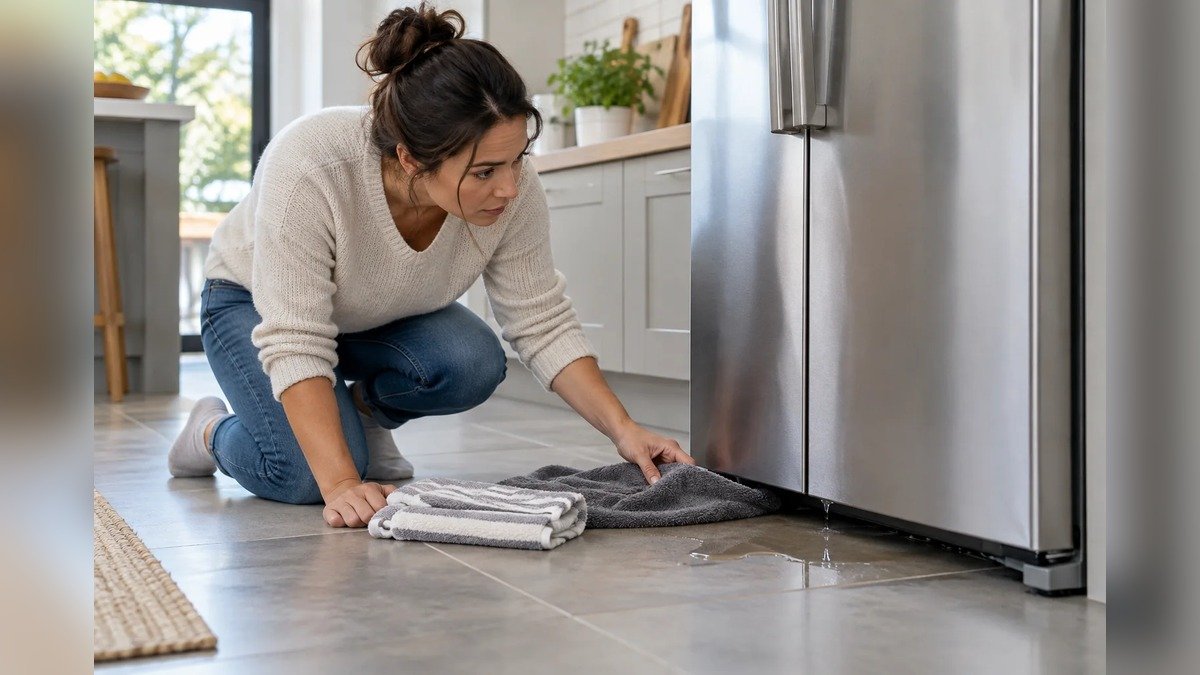
Refrigerator Leaking Water: 5 Leak Locations, 8 Causes and 5 First Checks

Where Is the Water, and When Does It Appear?
The location and timing of the water point to the cause, because each part of the refrigerator leaks in a different place. The table below matches five locations to their likely causes. Each cause is explained in the sections that follow.
| Where the water appears | Likely causes |
|---|---|
| Inside, on shelves and in the crisper drawers | Clogged defrost drain |
| Under the refrigerator | Drain pan, defrost drain or inlet valve |
| On the floor in front | Dispenser tray, ice maker or supply line |
| Behind the refrigerator | Supply line or inlet valve |
| Near the dispenser or the filter | Dispenser, filter or filter housing |
Note whether the leak is constant, appears only when the ice maker runs or follows a power outage, because the timing narrows the cause. Dry the floor first, so that new water is easy to see.
What Should You Check First When a Refrigerator Is Leaking?
Five first checks resolve many leaks before any part is replaced.
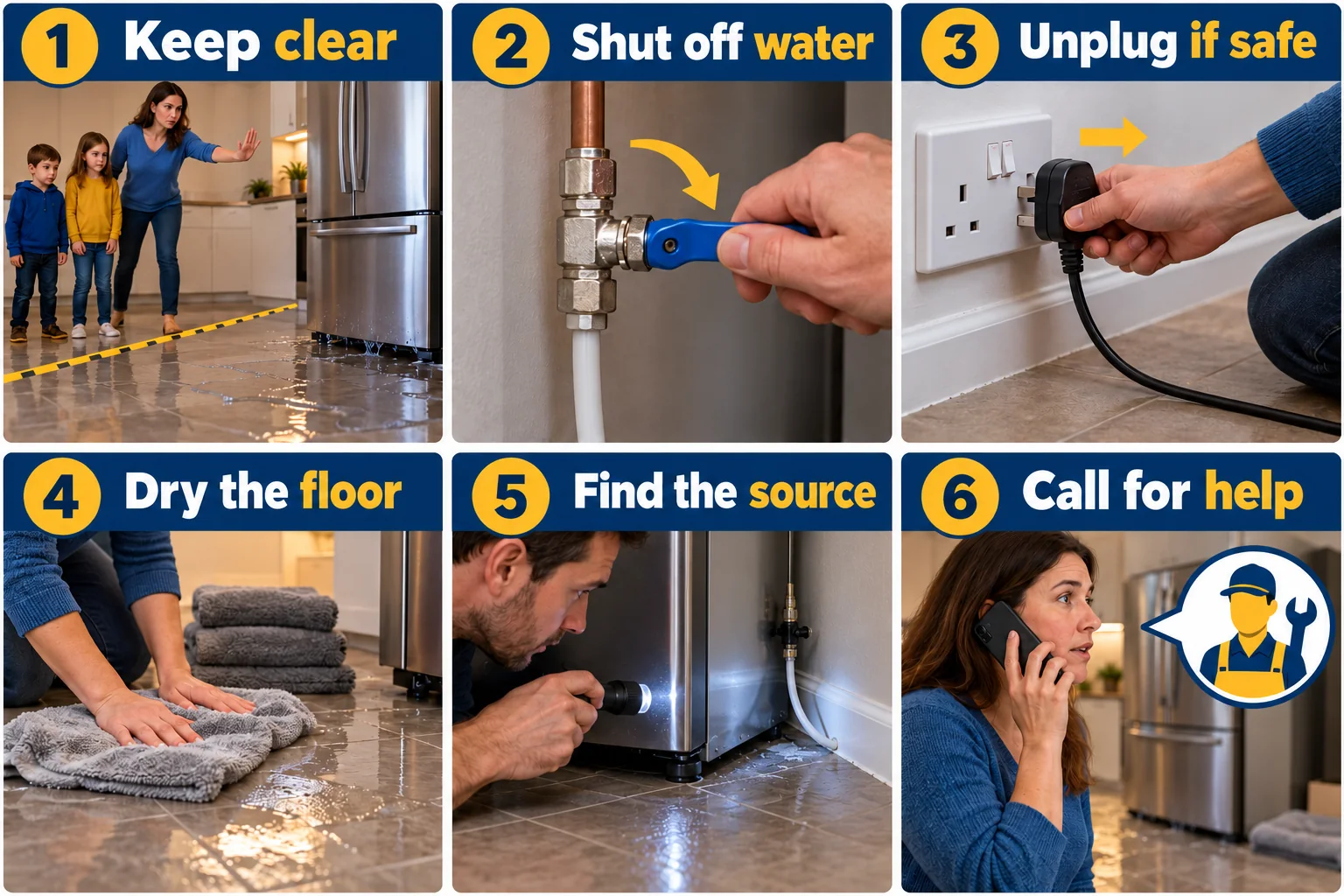
Safety notice: Unplug the refrigerator if water reaches the plug, the cord or the rear panel. Shut off the water at the shutoff valve before touching the line or the valve. Electrical testing, refrigerant handling and sealed-system work belong to a technician.
- Confirm that the refrigerator is level, as explained in refrigerator leveling.
- Inspect the drain pan under the unit for cracks and overflow.
- Wipe away spills inside the refrigerator, and check whether the water is a spill or a leak.
- Look for ice maker overflow or ice buildup in the bin.
- Confirm that the water filter is fully seated.
Record where the water appears and when, because the pattern identifies the cause in the sections below.
Is Water Collecting Inside?
Water inside the refrigerator or in the crisper drawers usually comes from a clogged defrost drain. The defrost drain carries meltwater from the evaporator to the drain pan. A clog sends the water back into the cabinet, where it pools or freezes. Clear the drain by flushing it with warm water, following the manual. Difficulty: easy to moderate. The full steps are in refrigerator clogged defrost drain.
How is the defrost drain cleared?
Warm water flushed through the drain opening clears most clogs, following the manual. Unplug the refrigerator and find the drain opening on the freezer floor or behind the back panel. Flush the opening with warm water, not boiling water, using a bulb syringe. Confirm that the water reaches the drain pan.
What causes water in the crisper drawers?
Water in the crisper drawers usually runs down the back wall from a clogged defrost drain. High humidity and condensation on cold shelves can add moisture. Check the back wall for ice or a wet trail before checking other parts.
Is It the Supply Line or the Inlet Valve?
A leaking supply line or inlet valve drips water behind or under the refrigerator, and the water shutoff comes first. Both parts carry water to the ice maker and the dispenser. Shut off the water at the shutoff valve before touching either part.
Is the supply line leaking?
A loose or damaged supply line leaks at the connections or along the line. Inspect the line, the connection to the refrigerator and the connection at the shutoff valve. Tighten loose fittings by hand and then lightly with a wrench, without overtightening. Replace a line that is cracked, kinked or damaged. Difficulty: easy to moderate. Call a plumber for leaks at the wall valve or in the house line.
Is the inlet valve leaking?
A faulty inlet valve drips water into the ice maker or the dispenser when no water is requested. The valve opens and closes with an electric solenoid. A technician tests the solenoid with a meter and the manufacturer specification. Replace a valve that leaks or fails the test. Difficulty: moderate. The valve feeds the ice maker, covered in refrigerator ice maker not working, and the dispenser, covered in refrigerator water dispenser not working.
Is It the Ice Maker or the Dispenser?
An ice maker or dispenser fault leaks water at the front or on the freezer floor. Both parts share the water supply and the fill system.
Is the ice maker overflowing?
A frozen fill tube, an unlevel ice mold or a faulty fill valve makes the ice maker overflow. Unplug the refrigerator, thaw the fill tube and level the ice mold. Difficulty: moderate. The ice maker faults are covered in refrigerator ice maker not working.
Is the dispenser leaking?
A cracked or overflowing drip tray, a switch that stays on or a faulty inlet valve makes the dispenser leak. Empty and dry the tray and inspect it for cracks. Replace a cracked tray. Difficulty: easy to moderate. The dispenser faults are covered in refrigerator water dispenser not working.
Is It the Filter or the Filter Housing?
A filter that is not fully seated or a cracked housing leaks water near the filter location. Five steps resolve most filter leaks:
- Reseat the filter fully, following the manual.
- Inspect the sealing ring and the filter body for damage.
- Use only the filter type listed in the manual.
- Check the housing connections for drips after reseating.
- Replace a cracked filter housing.
An overdue filter can restrict flow and raise pressure at the housing, so replace the filter on the schedule in the manual. Difficulty: easy for reseating and moderate for housing replacement.
Is It the Drain Pan or Condensation?
Water on the floor can also come from a cracked or overflowing drain pan or from condensation on the outside of the unit.
Is the drain pan cracked or overflowing?
A cracked or overflowing drain pan leaks meltwater onto the floor. The pan sits under the unit and holds defrost water until it evaporates. Inspect the pan for cracks and debris. Clean the pan and replace a cracked pan. Difficulty: easy to moderate.
Is it condensation?
High humidity or a worn door seal makes moisture bead on the outside of the unit and drip. Check the door seals with the paper strip test described in refrigerator door seal and gasket. A refrigerator that runs constantly can add condensation, as explained in refrigerator running constantly.
How Do You Stop the Leak Safely?
Shut off the water, unplug the refrigerator if water reaches electrical parts and protect the floor.
- Close the water shutoff valve behind or beside the refrigerator.
- Unplug the refrigerator if water is near the plug, the cord or the rear panel.
- Absorb standing water with towels and place a shallow pan under the leak.
- Keep children and pets away from the wet floor.
When Should You Call a Technician or Replace the Refrigerator?
Call a technician when the inlet valve, the ice maker or a hidden leak needs testing, and call a plumber for leaks at the wall valve or in the house line. Compare the repair quote with the age of the refrigerator, as explained in repair or replace a refrigerator. Cost drivers are listed in refrigerator repair cost. Leak causes vary by layout, so use the guide for your type:
- French door refrigerator problems
- Side-by-side refrigerator problems
- Top-freezer, bottom-freezer and mini refrigerator problems
What Do People Also Ask About a Refrigerator Leaking Water?
Why is my refrigerator leaking water after a power outage?
Melted frost and ice drain into the pan or the cabinet after an outage, so dry the unit and recheck the leak once the temperature recovers. Check the food as explained in how long food stays safe in a refrigerator without power.
Why is my refrigerator leaking water after a move?
A refrigerator that sits out of level or has a loosened water line after a move leaks until the unit is leveled and the fittings are checked. The settling steps are in refrigerator startup and settling.
Why does my refrigerator leak only when the ice maker runs?
A leak that appears only when the ice maker runs points to an overflowing mold, a frozen fill tube or a loose fill line.