
Refrigerator Water Dispenser Not Working: 4 First Checks, 7 Causes and When to Call a Technician
What Does a Water Dispenser Not Working Mean?
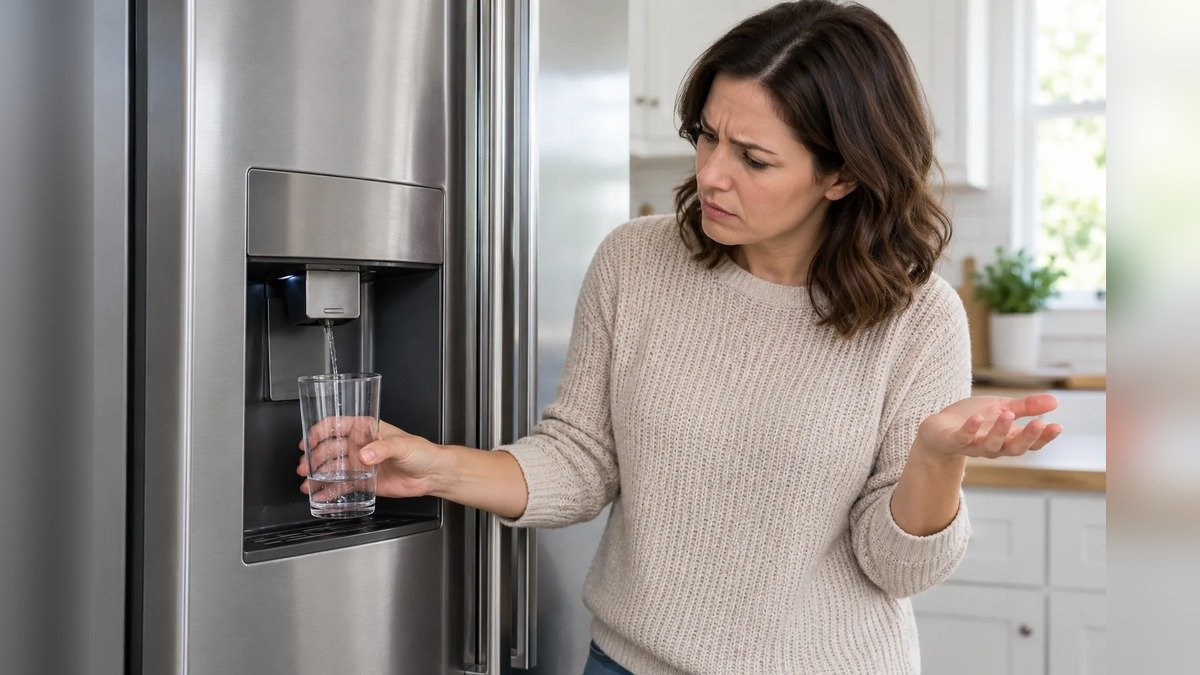
A water dispenser is not working when no water flows, the flow is weak or the dispenser drips or stops in the middle of a pour. Examples include a silent paddle, a slow trickle, spurting water and a long delay before the first water. The dispenser shares the water system with the ice maker, so a fault in the shared parts can affect both. The causes range from a closed shutoff valve to a failed inlet valve, and the checks below separate the simple causes first. If the ice maker also fails, read refrigerator ice maker not working.
What Should You Check First When the Dispenser Is Not Working?
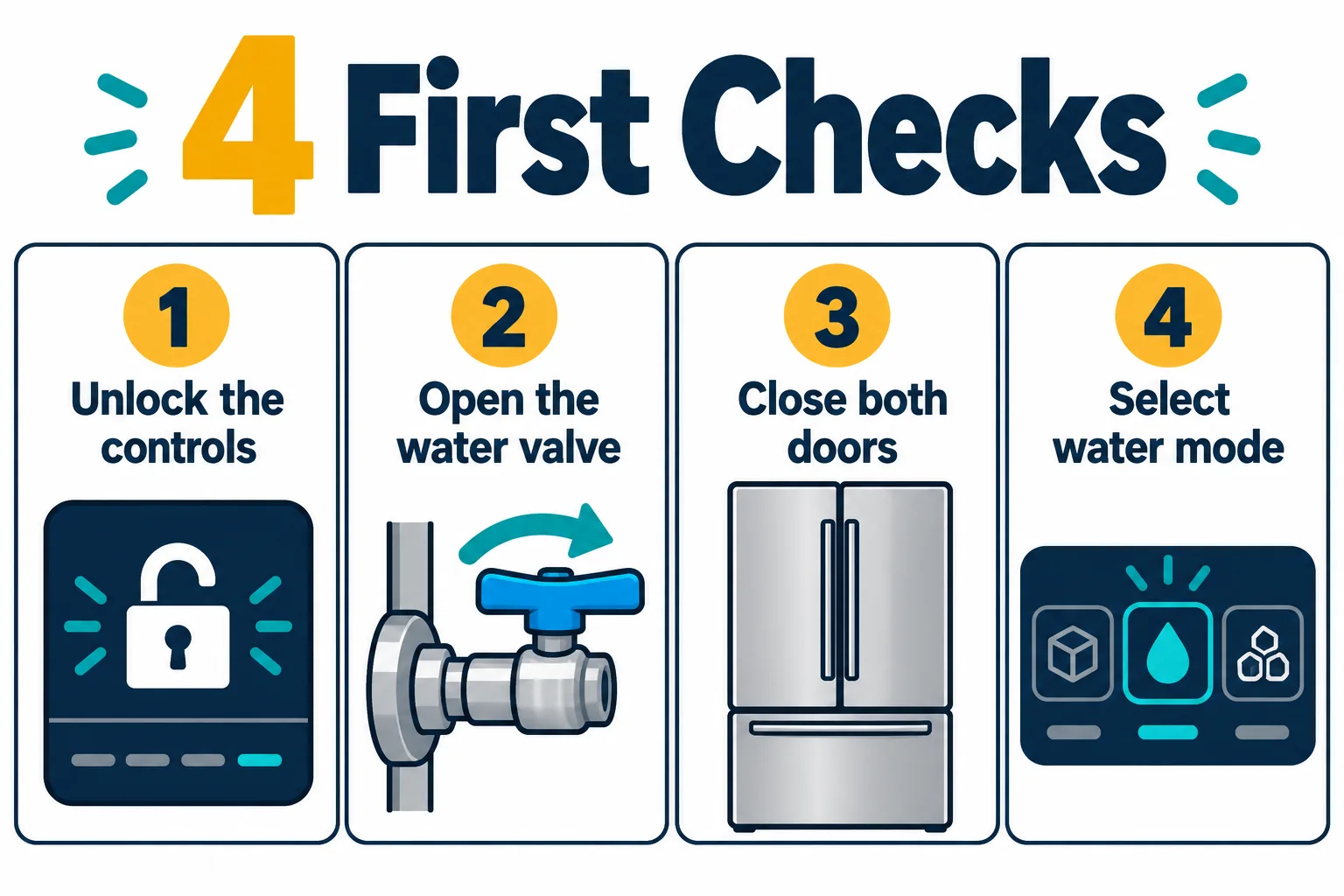
Four first checks resolve many dispenser complaints before any part is replaced.
Safety notice: Unplug the refrigerator before touching any part behind a panel. Locate the water shutoff valve and shut off the water before touching the line or the valve. Electrical testing, refrigerant handling and sealed-system work belong to a technician.
- Turn off the dispenser lock or the child lock on the control panel.
- Confirm that the water shutoff valve is fully open.
- Close both doors fully, because many dispensers stop when a door is ajar.
- Confirm that water, not ice, is selected on the dispenser.
Run water through the dispenser for the time stated in the manual after any change, because air in the line causes spurting. Photograph the control panel before changing a setting. Note whether the ice maker works, because the answer narrows the cause. Record which check changed the result.
Is the Water Filter the Cause?
A clogged, overdue or wrongly seated filter reduces or stops the water flow. Check the filter indicator and the replacement date. Reseat the filter fully, following the manual. Test the flow with the bypass plug if the manual lists one. Use only the filter type listed in the manual. Replace an overdue filter on the schedule in the manual. Difficulty: easy.
How do you tell that the filter is the cause?
Flow that improves with the filter removed and the bypass plug installed identifies the filter as the cause. Use the bypass plug only if the manual lists one. Return the filter to service if the flow does not change.
How is the filter reseated?
Turn the filter to the unlock position, remove it, inspect the sealing ring and reinstall it until it locks. Run water through the dispenser to flush air from the line. Wipe up any drips at the housing.
Is the Inlet Valve Failing?
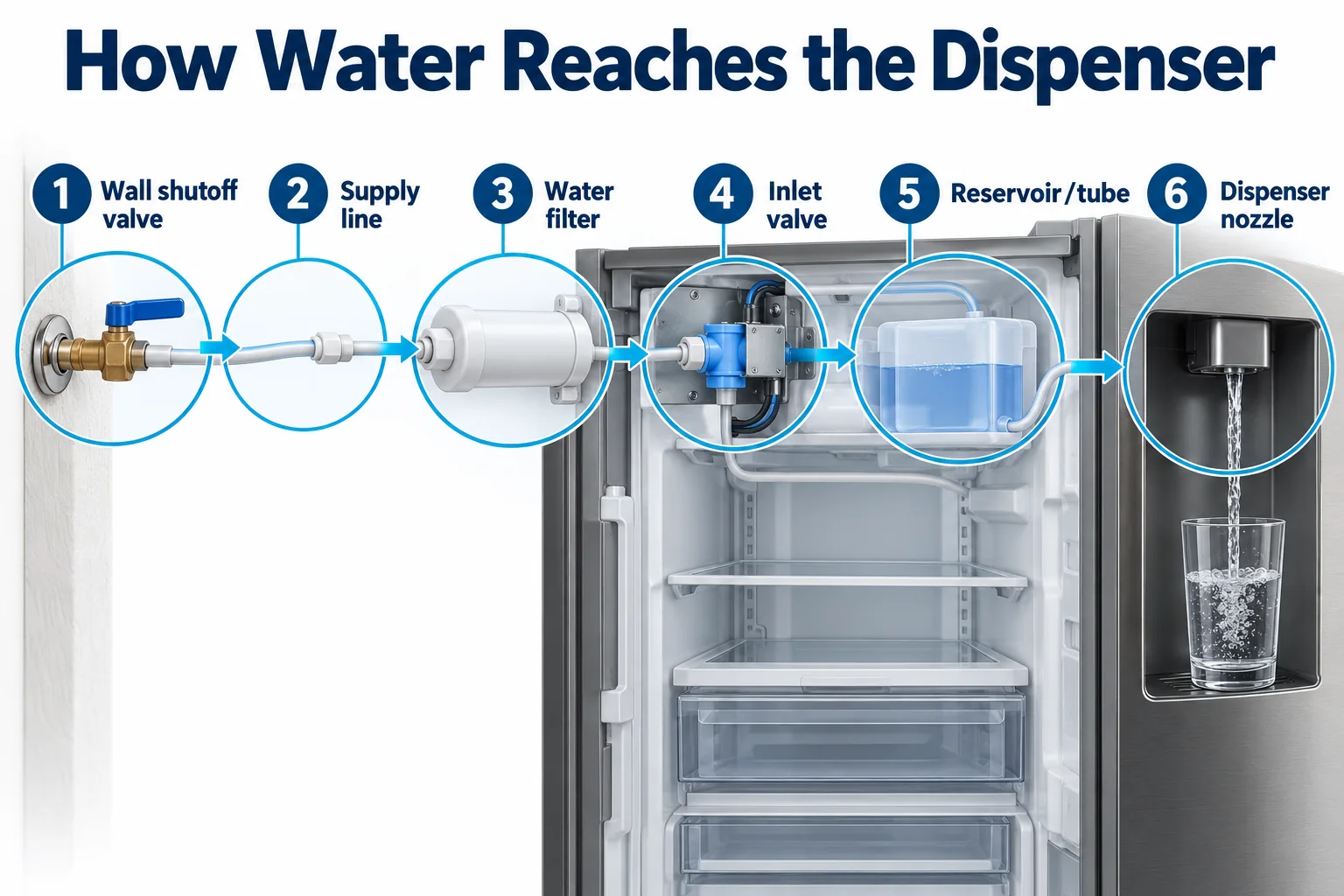
A failed inlet valve passes little or no water to the dispenser even when the water pressure at the line is normal. The valve opens and closes with electric solenoids, and some models use one solenoid for the dispenser and another for the ice maker. A technician tests each solenoid with a meter and the manufacturer specification. Replace a valve that fails the test. Difficulty: moderate. A leaking valve is covered in refrigerator leaking water.
How does the inlet valve work?
The inlet valve opens an electric solenoid when the board or the switch calls for water. In dual-valve models, one solenoid feeds the dispenser and the other feeds the ice maker.
What does a failed inlet valve look like?
A failed valve gives no water, a weak flow or a drip when no water is requested. The dispenser can fail while the ice maker works, or the reverse.
How is the inlet valve tested?
A technician measures the solenoid resistance with a meter, compares the result with the manufacturer specification and checks the water pressure at the valve inlet.
Is the Water Line Frozen or Kinked?
A frozen or kinked water line restricts or blocks the flow to the dispenser. Check both conditions before testing any electrical part.
Is the water line frozen?
A partly frozen line gives a slow flow, and a fully frozen line gives none. Unplug the refrigerator and let the line thaw on its own. Do not use a heat gun or an open flame. Check the freezer temperature and the door seals, because warm air and moisture feed the freezing. Difficulty: easy to moderate.
Is the water line kinked?
A kinked line restricts the flow, usually behind the unit after the refrigerator was moved. Shut off the water first, pull the refrigerator forward carefully and inspect the line along its path. Replace a line that is cracked, kinked or damaged. Difficulty: easy to moderate. Call a plumber for faults at the wall valve or in the house line.
Is the Dispenser Switch, the Door Switch or the Control Board at Fault?
A failing switch or board stops the dispenser from opening the valve when the paddle is pressed. Rule out the lock, the water shutoff and the filter first.
Is the dispenser switch failing?
A failing dispenser switch fails to signal the valve when the paddle is pressed. A technician tests the switch with a meter. Replace the switch if it fails the test. Difficulty: moderate.
Is the door switch failing?
A failing door switch tells the refrigerator that a door is open, which disables the dispenser. Press the switch by hand and listen for a click. Replace the switch if the dispenser stays disabled with the door closed. Difficulty: moderate.
Is the control board failing?
A failing control board ignores the paddle and the settings even when the switches and the valve test sound. A power reset clears some temporary faults. Replace the board only after a technician confirms the fault. Difficulty: technician-assisted.
What if the Ice Will Not Dispense?
Ice that will not dispense points to the ice maker or the ice chute rather than the water system. Check that ice, not water, is selected and that the crushed or cubed setting is correct. Look for fused cubes in the bin and for blockages in the chute. Water and ice dispensing use separate paths after the valve, so one can work while the other fails. Clear a blocked chute with the unit unplugged. The ice maker faults are covered in refrigerator ice maker not working.
What if the Water Tastes or Smells Bad?
Water that tastes or smells bad usually traces to an overdue filter, an unclean ice bin or odors in the refrigerator. Replace the filter on the schedule in the manual. Clean the dispenser nozzle and the drip tray with mild soap and water. Discard the first glasses of water after a filter change. Cover open food in both compartments.
When Should You Call a Technician?
Call a technician when the inlet valve, a switch or the control board needs testing, and call a plumber for faults at the shutoff valve or in the house line. Ask for a written quote that separates parts and labor. Call a technician before replacing a part that cannot be tested, because a wrong part adds cost. Dispenser layout varies by model type, and Side-by-side refrigerator problems covers the faults of that layout.
What Do People Also Ask About a Refrigerator Water Dispenser Not Working?
Why is my refrigerator water dispenser not working but the ice maker is?
Working ice with no water points to one side of the inlet valve, the dispenser switch or a frozen water line.
Why is my water dispenser slow?
A slow flow points to a clogged filter, a partly frozen line or low water pressure.
Why is my water dispenser not working after a filter change?
Air in the line or a filter that is not fully seated stops the flow, so reseat the filter and run water through the dispenser as the manual states.
Why does my water dispenser drip?
A dripping dispenser points to a leaking inlet valve or a switch that stays on, as explained in refrigerator leaking water.
Hi, I’m Ryan, a refrigeration engineer based in the UK Midlands. I’m passionate about engineering, technology, and understanding how things work, especially when it comes to heating, ventilation, air conditioning, and refrigeration systems.
I enjoy the hands-on side of engineering, from working with technical equipment to exploring practical solutions to everyday challenges. For me, engineering is more than just a profession; it’s about problem-solving, continuous learning, and developing valuable technical skills.
I also enjoy sharing glimpses of the engineering world through my Instagram page, @hvac.razza, where I showcase tools, equipment, and aspects of HVAC work.
Outside the technical side of things, I value genuine connections, meaningful conversations, and opportunities to learn from others. I’m always interested in connecting with people who share an appreciation for technology, practical skills, and personal growth.