
Refrigerator Condenser Coils: 5 Warning Signs, 4 Rule-Outs and 6 Cleaning Steps
What Do the Condenser Coils Do?
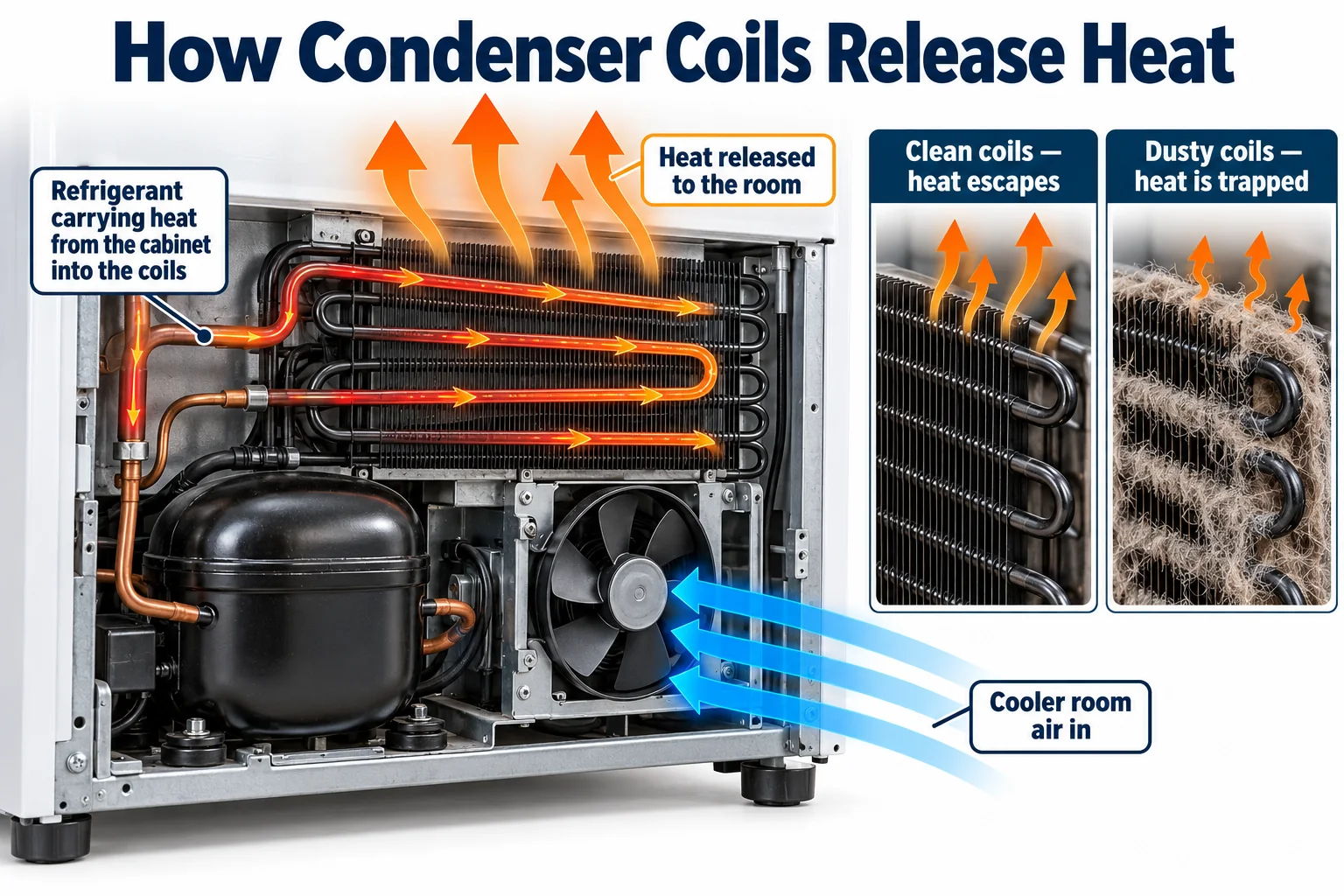
The condenser coils release the heat that the refrigerant carries out of the cabinet into the room air. The coils sit at the back, under the unit behind a grille or inside the cabinet walls on some models. A film of dust and pet hair insulates the coils, so the refrigerator runs longer to shed the same heat. Dirty coils are one cause of weak cooling, and the other causes are in refrigerator not cooling.
What Are the Signs of Dirty Condenser Coils?
Five signs point to dirty condenser coils.
- The refrigerator runs constantly or in long cycles
- The compartments are warmer than the setting
- The area around the compressor feels hot
- The compressor or the fan is louder than before
- The running cost rises
Several of these signs also come from other faults, so rule those out first.
Can dirty coils make a refrigerator run constantly?
Yes. Dust blocks the heat release, so the compressor runs longer to reach the set temperature. The other causes of constant running are in refrigerator running constantly.
Can dirty coils raise the electricity bill?
Yes. A longer running time uses more power, as explained in refrigerator running amps and power draw. The effect grows as the dust builds up.
What Else Looks Like Dirty Condenser Coils?
Four other faults mimic dirty coils, so rule them out before you pull the refrigerator out.
- A worn door seal that lets warm air in
- A condenser or evaporator fan that has stopped or slowed
- A temperature setting that is too cold, or a very warm room
- Food or ice blocking the vents inside the compartments
Warm air at the door edge points to the seal. A fan that does not turn points to the fan. A compartment that is cold in one part and warm in another points to blocked vents. Dust on the coils together with long running cycles points to the coils.
Where Are the Condenser Coils?
On many models the condenser coils sit behind a grille at the bottom front or on the back panel. The manual for the model shows the position and the panel to remove. Some models hide the condenser in the cabinet walls, and those models have no coils to clean. Record the model number before you search for the manual.
What if you cannot see any coils?
Some models hide the condenser in the cabinet walls or under a panel, and the manual says whether the model needs coil cleaning. Do not remove any panel beyond the ones that the manual shows.

How Do You Clean the Condenser Coils?
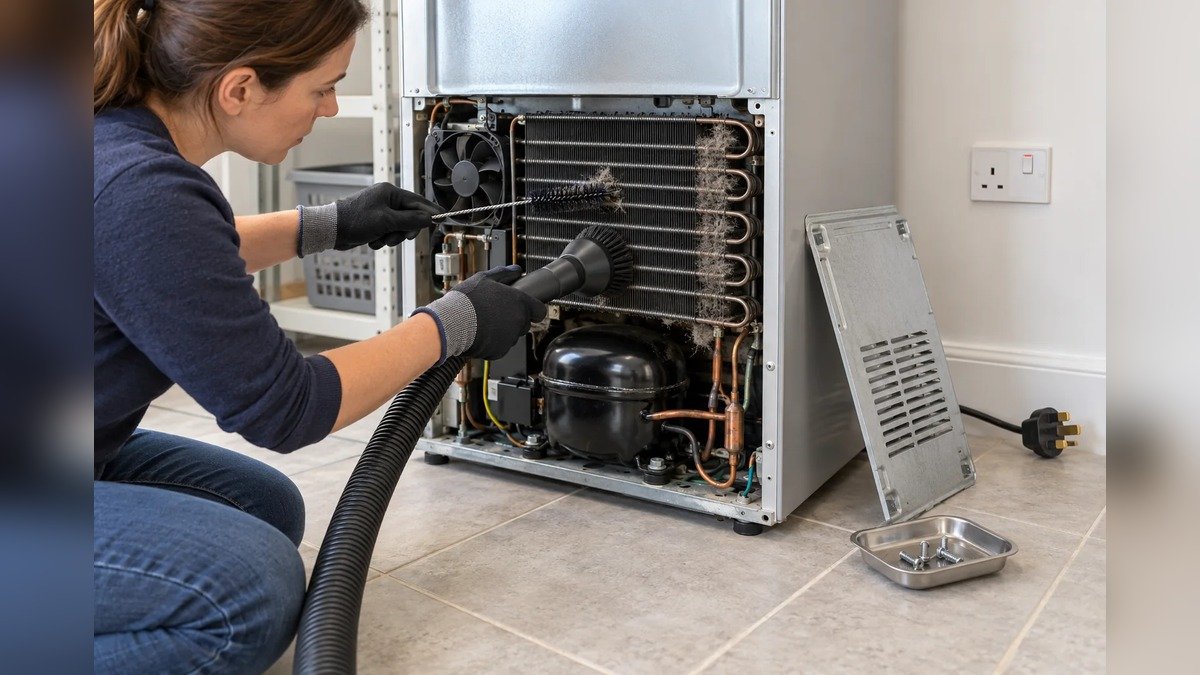
Unplug the refrigerator, reach the coils, vacuum the dust and brush the fins gently with a coil brush.
Safety notice: Unplug the refrigerator before touching any part behind a panel. Do not spray water or cleaner on the coils, and do not bend or cut the fins or the lines. Electrical testing, refrigerant handling and sealed-system work belong to a technician.
Six steps clean the coils:
- Unplug the refrigerator and pull it out gently, only as far as a water line allows.
- Remove the grille or the back panel that covers the coils, following the manual for the screws and clips.
- Vacuum the loose dust and hair with a soft brush attachment.
- Brush the fins gently with a coil brush, in the direction of the fins, and vacuum the loosened dust.
- Wipe the fan blades and the area around the compressor with a dry cloth, and keep the cloth away from the wiring.
- Refit the grille or the panel, leave the clearance at the back that the manual states, push the refrigerator back and plug it in.
Photograph the screws, the clips and any wiring before you remove anything. Wear gloves, because the fins have sharp edges. Watch the refrigerator over the following days for a drop in running time. Difficulty: easy when the coils sit behind a snap-off grille, and moderate when a back panel must come off.
How Often Should You Clean the Condenser Coils?
Clean the coils as often as the manual states, and more often with pets, dust or grease in the kitchen. A refrigerator in a dusty or greasy room collects dirt faster. Check the coils whenever the refrigerator starts to run longer than usual.
Do pets change how often you clean the coils?
Yes. Pet hair clogs the fins faster than dust, so check the coils more often in a home with pets. Vacuum the grille area at each cleaning of the floor.
What Should You Avoid When Cleaning the Coils?
Avoid water, sharp tools and force, because they damage the fins, the fan and the wiring. Do not push the refrigerator tight against the wall afterward, because the coils need airflow. Do not run the refrigerator with a panel off that the manual says must stay on.
Can you use water or a cleaning spray on the coils?
No. Water and sprays can reach the fan motor and the wiring, so use a dry brush and a vacuum. Wipe any dust that falls on the floor after the refrigerator is back in place.
When Should You Call a Technician?
Call a technician when the coils are clean and the refrigerator still runs constantly or does not cool, or when you see damage. If the coils are clean, the causes of weak cooling are in refrigerator not cooling, and the causes of constant running are in refrigerator running constantly. A fan that does not turn, an oily residue or a damaged line near the coils needs a technician. Stop and unplug the refrigerator if you smell burning. Give the technician the symptoms, what you cleaned and the model number.
What Do People Also Ask About Refrigerator Condenser Coils?
How do I clean refrigerator condenser coils?
Unplug the refrigerator, reach the coils behind the grille or back panel, then vacuum and brush the dust off gently.
Where are the condenser coils on a refrigerator?
On many models they sit behind the bottom grille or on the back panel, and some models hide them in the cabinet walls.
How often should you clean condenser coils?
Clean them as often as the manual states, and more often with pets, dust or grease in the kitchen.
What happens if you do not clean the condenser coils?
Dust insulates the coils, so the refrigerator runs longer, wastes power and strains the compressor, as explained in refrigerator running amps and power draw.
Is it safe to clean the coils yourself?
Yes, when the refrigerator is unplugged and you use a dry brush and a vacuum, and stop at any damaged line.
Related refrigerator guides

Hi, I’m Ryan, a refrigeration engineer based in the UK Midlands. I’m passionate about engineering, technology, and understanding how things work, especially when it comes to heating, ventilation, air conditioning, and refrigeration systems.
I enjoy the hands-on side of engineering, from working with technical equipment to exploring practical solutions to everyday challenges. For me, engineering is more than just a profession; it’s about problem-solving, continuous learning, and developing valuable technical skills.
I also enjoy sharing glimpses of the engineering world through my Instagram page, @hvac.razza, where I showcase tools, equipment, and aspects of HVAC work.
Outside the technical side of things, I value genuine connections, meaningful conversations, and opportunities to learn from others. I’m always interested in connecting with people who share an appreciation for technology, practical skills, and personal growth.