
Refrigerator Error Codes by Brand: 5 Fault Groups, 4 Reading Steps and 4 Next Actions
What Is a Refrigerator Error Code?
A refrigerator error code is a fault message that the control board stores when a sensor, fan, heater, door switch or connection fails a check. The board shows the code on the display, as a pattern of flashing lights or in a diagnostic mode, and some models show no code at all. Each brand uses its own codes, so one code can mean different faults on different brands. A code points to a fault group and not always to a failed part. The board that stores the codes is explained in refrigerator control board failure signs.
What Do Refrigerator Error Codes Point To?
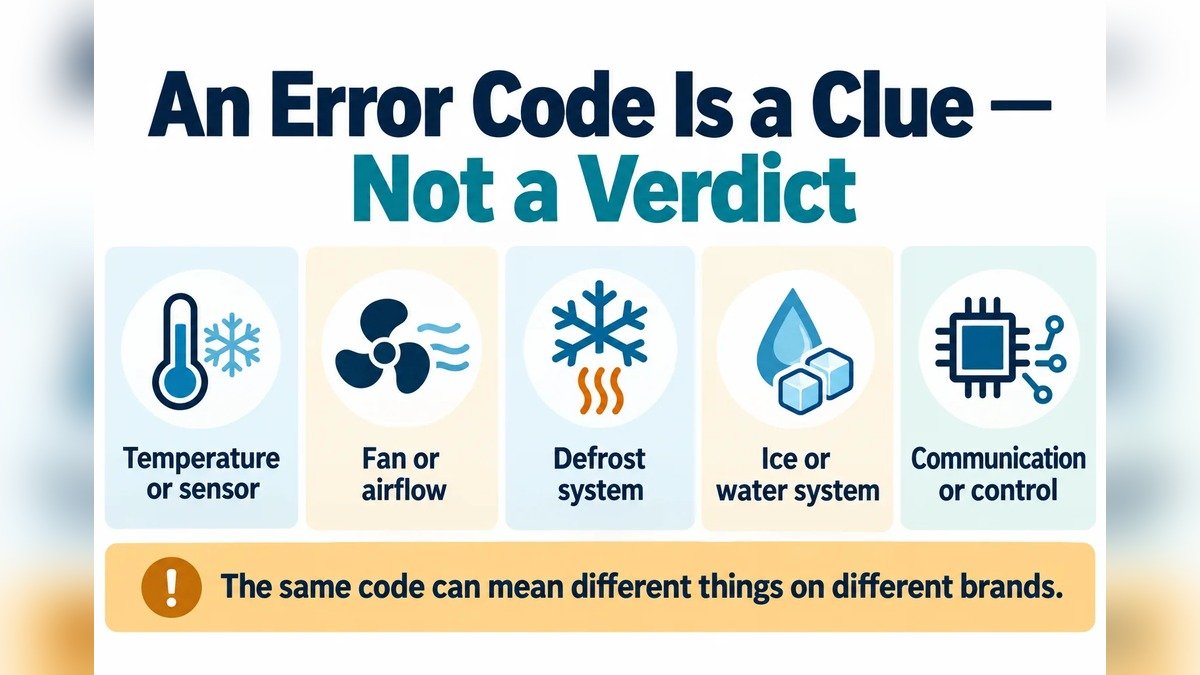
Error codes fall into five fault groups.
- Temperature sensor or thermistor faults
- Fan or airflow faults
- Defrost system faults
- Door, switch or latch faults
- Control board, display or communication faults
A sensor fault points to the parts explained in refrigerator thermostat, thermistor and damper problems, and a board or communication fault points to refrigerator control board failure signs.
Does an error code mean a part has failed?
No. A code can come from a temporary fault, a loose connector or a power event, and one reset clears the temporary kind. Run the simple checks before you replace any part.
Can the same code mean different things?
Yes. Brands and model years can assign the same code to different faults, so read each code from the manual for your model number. A code table for another model gives the wrong fault.
How Do You Read a Refrigerator Error Code?
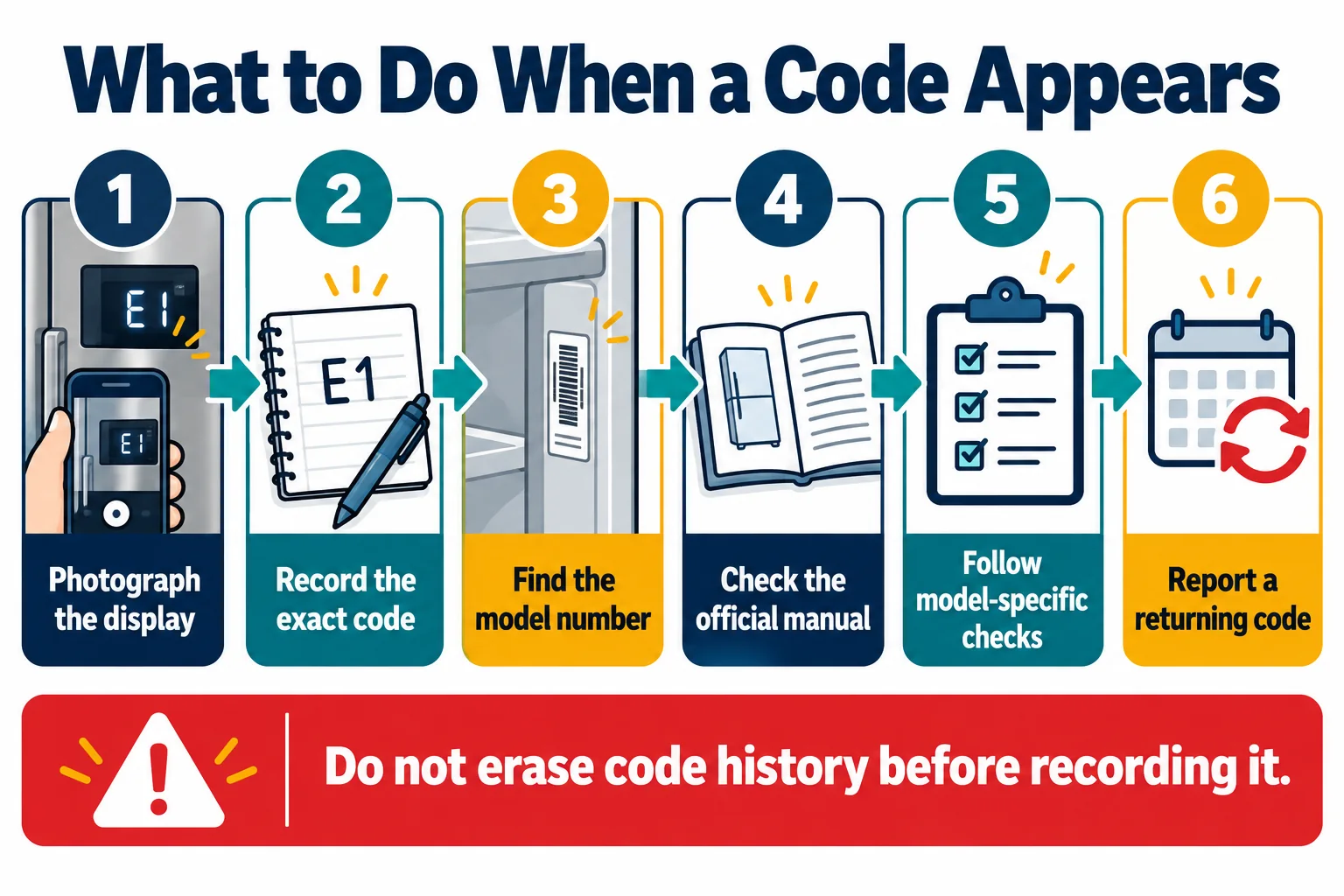
Record the code, find the model number, open the code table in the manual and match the code to a fault group.
Safety notice: Reading a code needs no panel removal. Unplug the refrigerator before touching any part behind a panel. Electrical testing, refrigerant handling and sealed-system work belong to a technician.
Four steps read an error code:
- Photograph the display or record the flash pattern, with the time.
- Record the model number from the label that is usually inside the refrigerator compartment.
- Open the code table in the manual, or on the manufacturer support page for the model number.
- Match the code to its fault group and note the check or part that the table names.
Read every code in order if the display shows more than one. No code should be taken from memory, from a forum post or from a table for another model. A power outage can also set a code, so note whether the power failed before the code appeared.
How Do Refrigerators Show Error Codes?
Refrigerators show error codes on the display, as flashing lights or in a diagnostic mode, and some models show none. Display codes appear as letters, numbers or symbols on the temperature display. Light codes appear as a flash count or a pattern on an indicator. Some smart models also send the code to a phone app. The diagnostic mode, which brands name differently, cycles the loads and displays fault information. The entry steps come from the manufacturer documentation for the model, and no entry sequence should be taken from memory.
How Do Error Codes Differ by Brand?
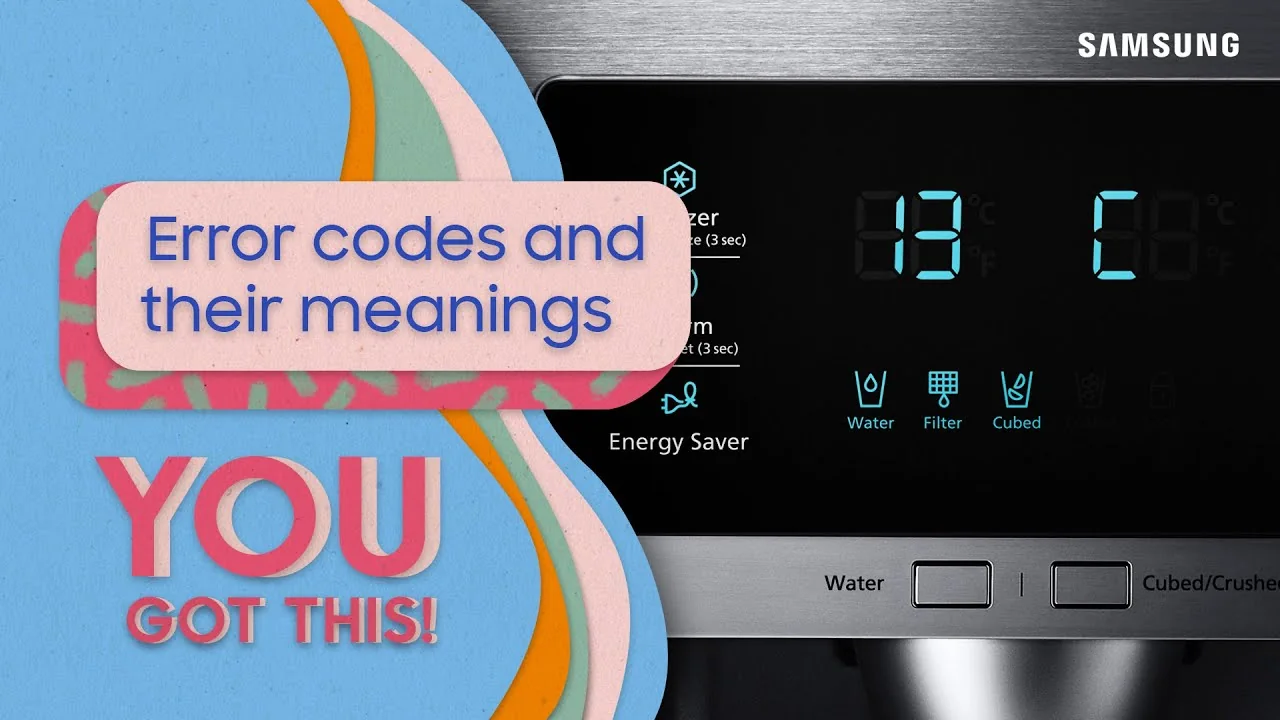
Each brand uses its own code set and display method, so read a code from the manual for that brand and model. GE, Frigidaire, Whirlpool, LG and Samsung each publish their own code tables, and the same brand can change a table between model years. The same rule applies to every brand.
How do you find GE refrigerator error codes?
Open the GE manual or support page for the model number and read the code table there, as for every brand. The page for another brand or another model gives the wrong fault.
Do brands follow a common code standard?
No common code standard applies across brands, so a code table for one brand does not apply to another. Use the table for your brand and model number.
What Should You Do After You Read a Code?
Record the code, run the simple checks for its fault group, reset once and watch whether the code returns. Four actions follow a code:
- Run the simple checks for the fault group: the power, the settings, the doors and the vents.
- Reset the refrigerator once, as explained in how to reset a refrigerator.
- Watch the display and the cooling for the time that the manual states.
- Record any code that returns, with the time.
A reset clears the stored codes, so photograph the code first. Do not reset repeatedly in the hope that the fault clears, because each reset erases the stored codes that the technician needs.
Can You Fix the Fault Behind a Code Yourself?
You can run the simple checks and one reset, and a technician should handle any part test or replacement. A sensor, fan, defrost or board code points to a part test, which needs the manual and the right tools. A sensor code points to the parts explained in refrigerator thermostat, thermistor and damper problems. Sealed-system work and refrigerant handling belong to a technician. Difficulty: easy for the checks and the reset, technician-assisted for any part test.
When Should You Call a Technician?
Call a technician when a code returns after one reset, when the refrigerator stops cooling or when you see burn marks or smell burning. A code that returns after a reset points to a failed part or a failing board, as explained in refrigerator control board failure signs. Stop and unplug the refrigerator if you see burn marks or smell burning near the controls. Give the technician the code, the model number, the time of the code and the number of resets you tried. Ask for a written quote that separates the diagnosis from the labor.
What Do People Also Ask About Refrigerator Error Codes?
What do refrigerator error codes mean?
A code names the fault group that the control board detected, and the manual for your model number gives the exact meaning.
Where do I find the error code list for my refrigerator?
The manual and the manufacturer support page for your model number carry the code list.
How do I clear a refrigerator error code?
Reset the refrigerator once, as explained in how to reset a refrigerator, and a code that returns needs diagnosis.
Why does my refrigerator show an error code but still cool?
A code can come from one faulty part, such as a sensor or a fan, while the rest of the cooling system keeps running.
Do all refrigerators have error codes?
No. Mechanical models with a dial thermostat have no board and no codes, and some electronic models show none on the display.
Related refrigerator guides
Manufacturer error-code sources
Treat an error code as a diagnostic lead, not a replacement for the model manual. Record the exact code before resetting because a reset can clear evidence. The manufacturer and model series decide the meaning.