
Refrigerator Compressor Problems: 6 Signs, 5 Rule-Outs and 4 Causes of Failure
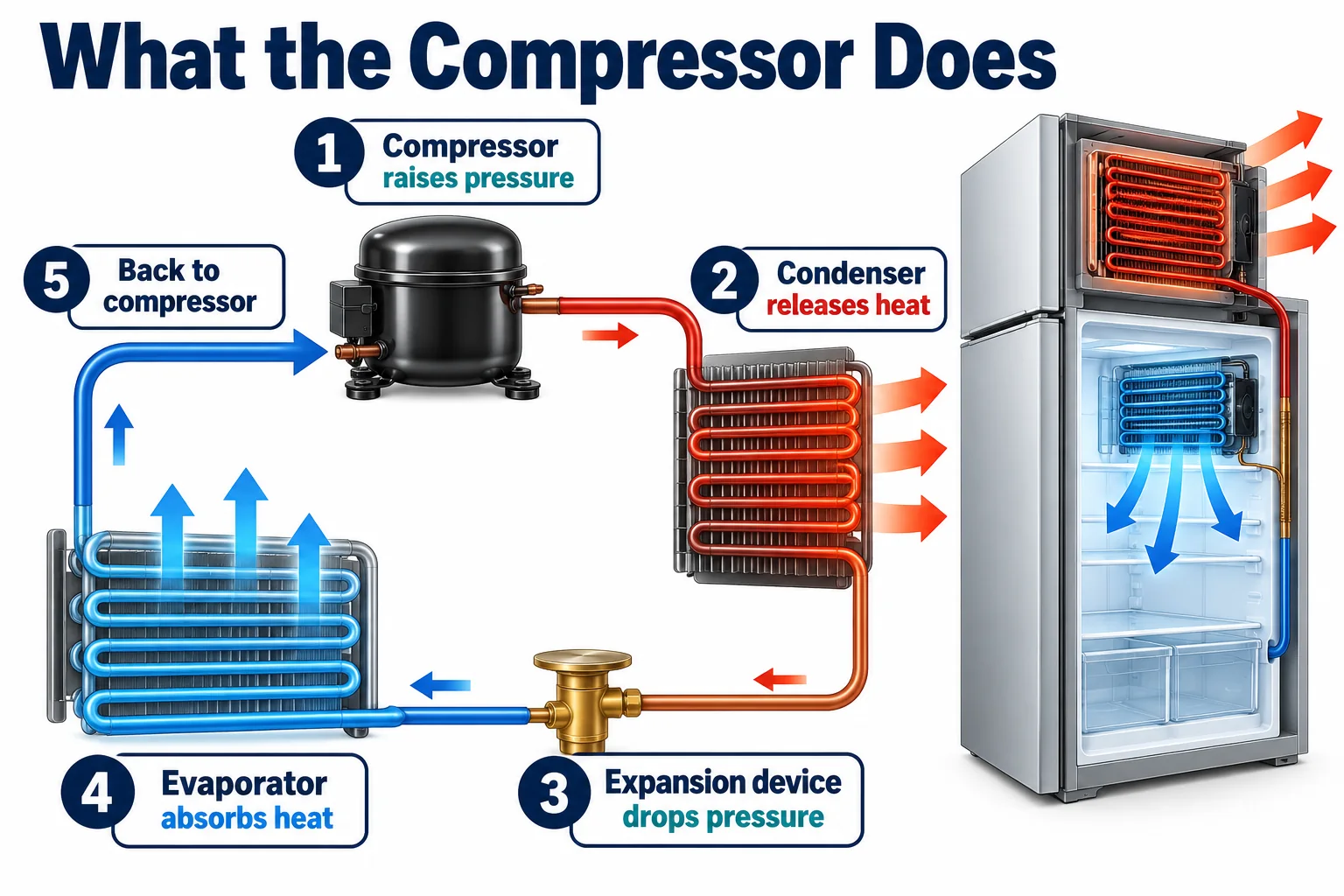
What Does the Compressor Do?
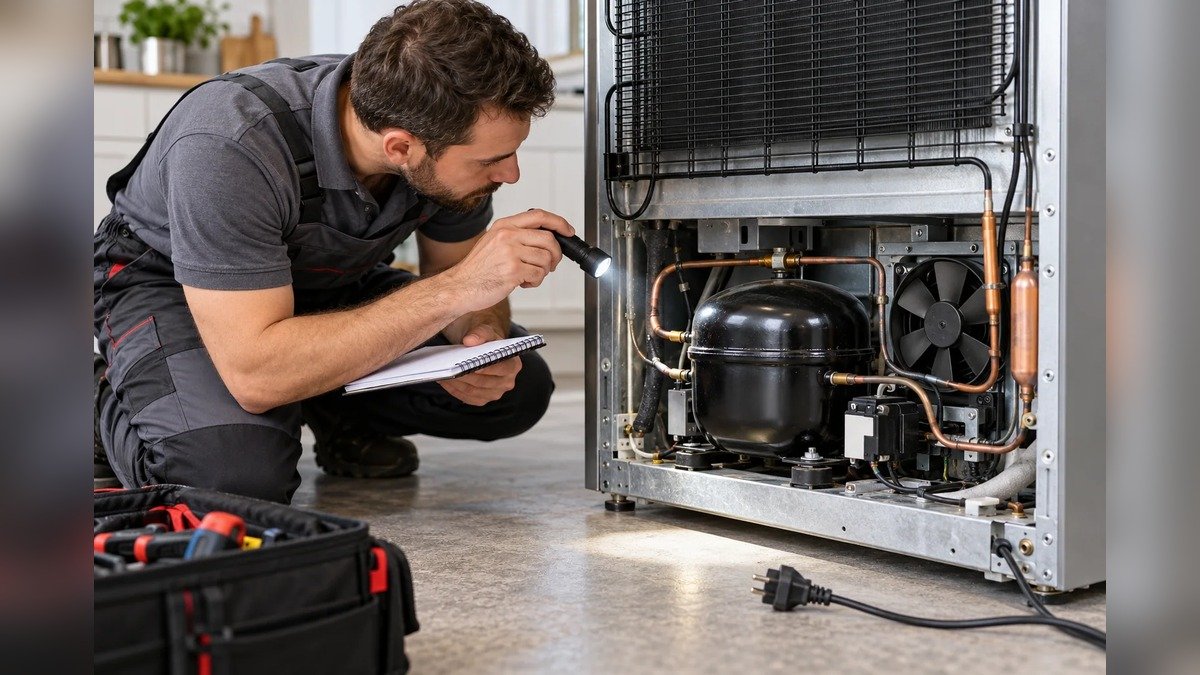
The compressor pumps and pressurizes refrigerant, which moves heat out of the cabinet through the sealed system. The part is a black metal dome at the rear or the bottom of the unit. A start relay and an overload protector attach to its side and help it start and protect it from overheating. The compressor runs in cycles, starting when the thermostat calls for cooling and stopping when the cabinet reaches temperature. A compressor that never stops or never starts signals a fault. The full cooling cycle is explained in how a refrigerator cools.
What Are the Signs of Compressor Trouble?
Six signs point to compressor trouble, and the table below matches each sign to its likely meaning.
| Sign | What it indicates |
|---|---|
| Clicking every few minutes | Start relay or a compressor that fails to start |
| Humming without starting | Compressor, relay or low voltage |
| Overheating and shutting off | Dirty coils, a weak fan or a failing compressor |
| Tripping the breaker | An electrical fault in the compressor or the wiring |
| Running constantly | Dirty coils, a door seal leak or a compressor losing efficiency |
| Warm refrigerator with the fans running | A compressor that is not pumping or a sealed-system fault |
Constant running has several causes, as explained in refrigerator running constantly. Do not touch a hot compressor. Record the sign, the time and the cooling result for the technician.
How do you tell a normal hum from a fault?
A steady low hum while the refrigerator cools is normal, and a loud, rattling or intermittent hum is a fault. Compare the sound with the sound of the unit when it was new.
What does a tripped overload protector sound like?
A tripped overload protector stops the compressor after a short hum and restarts it after a cooling period. Repeated cycles of this pattern point to overheating or a weak start relay.
What Should You Rule Out First?
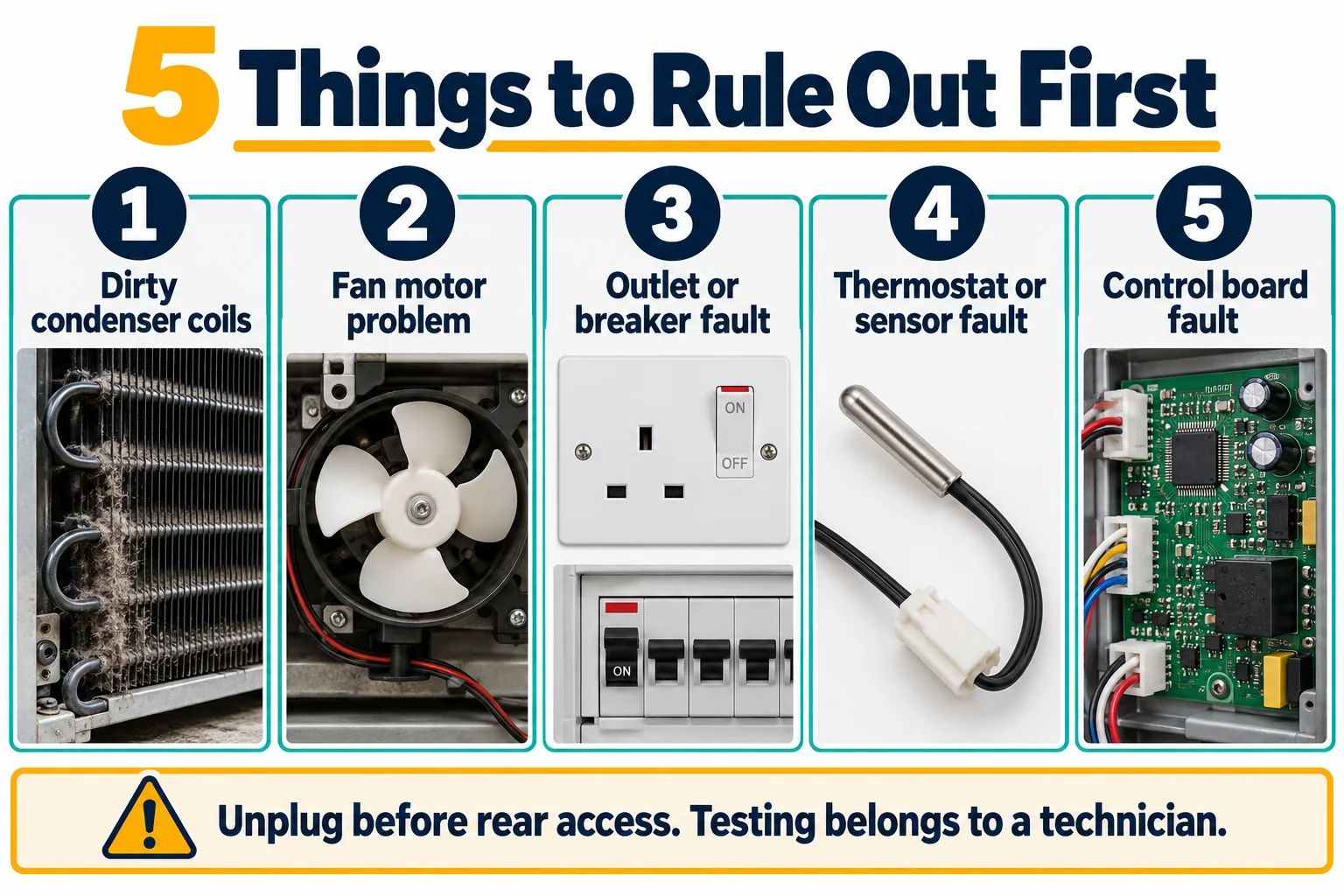
Five causes mimic a failing compressor, so rule them out first.
Safety notice: Unplug the refrigerator before touching any part at the back or the bottom. Stop at the checks below. Electrical testing, refrigerant handling and sealed-system work belong to a technician.
- Inspect and clean the condenser coils, as explained in refrigerator condenser coil cleaning.
- Confirm that the condenser and evaporator fans run, as explained in refrigerator fan motors.
- Confirm power at the outlet and the circuit breaker.
- Rule out a thermostat, sensor or damper fault, as explained in refrigerator thermostat, thermistor and damper problems.
- Rule out a control board fault, as explained in refrigerator control board failure signs.
Record the result of each check, because the technician uses the record to skip repeated tests.
Is It the Compressor or the Start Relay?
A technician separates a start relay fault from a compressor fault with a short sequence of electrical tests. The relay is a low-cost part, and the compressor is not, so the order of the tests matters. The relay is tested first, because a relay fault is cheaper to correct and testing it first can avoid an unnecessary compressor repair. The relay is covered in refrigerator start relay.
What can you check safely at home?
Listening, observing and recording are the only safe checks at home. Listen for repeated clicking. Confirm that the fans run. Note whether the compressor hums, and note how long the unit runs before it shuts off.
Which tests need a technician?
Every electrical test needs a technician, because the tests involve live circuits and manufacturer specifications. The technician tests the start relay, the overload protector and the compressor windings against the specification. The windings are tested for resistance and for a short to ground. The technician also measures the voltage at the unit during startup. Do not test live circuits at home. Difficulty: technician-only.
What Do the Start Relay and the Overload Protector Do?
The start relay and the overload protector help the compressor start and protect it from overheating, and a fault in either part mimics compressor failure. A failed relay is replaced as a low-cost part, and a failed compressor is a sealed-system repair. The relay tests and replacement are in refrigerator start relay.
What does the start relay do?
The start relay supplies the extra current that starts the compressor motor. In many models it is a small device that plugs into the compressor terminals.
What does the overload protector do?
The overload protector cuts power to the compressor when it overheats or draws too much current. It resets after the compressor cools.
Why Do Compressors Fail?
Compressors fail from heat, electrical stress, age or a refrigerant leak. Four causes explain most failures:
- Heat from dirty condenser coils, as explained in refrigerator condenser coil cleaning
- Electrical problems, such as low voltage, surges or a weak start relay
- Age and wear
- A refrigerant leak, which leaves the compressor running without producing cold
Dirty coils raise the operating temperature and add wear. Low voltage and surges stress the motor windings. Wear accumulates over years of cycling. A leak lets the compressor run without producing cold.
Is It Worth Repairing or Replacing the Compressor?
Compressor repair suits a younger refrigerator, and replacement of the whole refrigerator suits an older one. A compressor repair is a sealed-system repair, so the cost is higher than for most parts. Ask the technician for a written quote that separates parts and labor. The cost drivers are listed in refrigerator compressor replacement cost. Compare the quote with the age of the refrigerator, as explained in repair or replace a refrigerator.
How does age affect the decision?
A compressor repair on an old refrigerator buys less remaining service than the same repair on a younger unit. Weigh the repair cost against the remaining life.
What should the quote include?
A written quote should separate the compressor, the starting parts, the refrigerant work and the labor. Compare quotes from more than one technician.
How does the warranty affect the decision?
Some manufacturers cover the compressor for longer than the rest of the refrigerator, so check the warranty before paying for a repair.
When Must a Technician Handle the Compressor?
A compressor repair or replacement needs a technician, because refrigerant handling requires EPA Section 608 certification. Never vent refrigerant, add refrigerant, cut refrigerant lines or attempt brazing. Call a technician before replacing any part that cannot be tested. Hire a technician who holds the EPA Section 608 certification, and ask to see the credential. Ask for the repair warranty in writing, and keep the invoice for any warranty claim. The line between home work and technician work is explained in refrigerator repair: DIY or professional.
How Do You Prevent Compressor Failure?
Three habits reduce the heat and the electrical stress that fail compressors.
- Clean the condenser coils on the schedule in the manual, as shown in refrigerator condenser coil cleaning.
- Keep the clearance around the unit that the manual specifies.
- Plug the refrigerator directly into a grounded outlet, and check the supply as explained in refrigerator running amps and power draw.
What Do People Also Ask About Refrigerator Compressor Problems?
Is a hot compressor normal?
A compressor runs warm during normal operation, and a compressor that shuts off repeatedly or smells of burning is overheating.
Why does my compressor run but the refrigerator is not cooling?
A compressor that runs without cooling points to a sealed-system fault, dirty coils or a failed fan.
How long do refrigerator compressors last?
Compressor life depends on heat, voltage and maintenance, and the typical life of the whole refrigerator is covered in refrigerator lifespan.
US and UK refrigerant-work boundary
Home diagnosis must stop before opening, cutting or tapping the sealed refrigerant circuit. In the US, EPA Section 608 certification is required for work that could release refrigerant. In the UK, work on equipment containing F-gas requires the relevant qualification. Refrigerant type and local rules vary, so use a qualified refrigeration technician for sealed-system work.