
Refrigerator Not Cooling: 6 First Checks, 10 Causes and When to Repair or Replace
What Does a Refrigerator Not Cooling Mean?
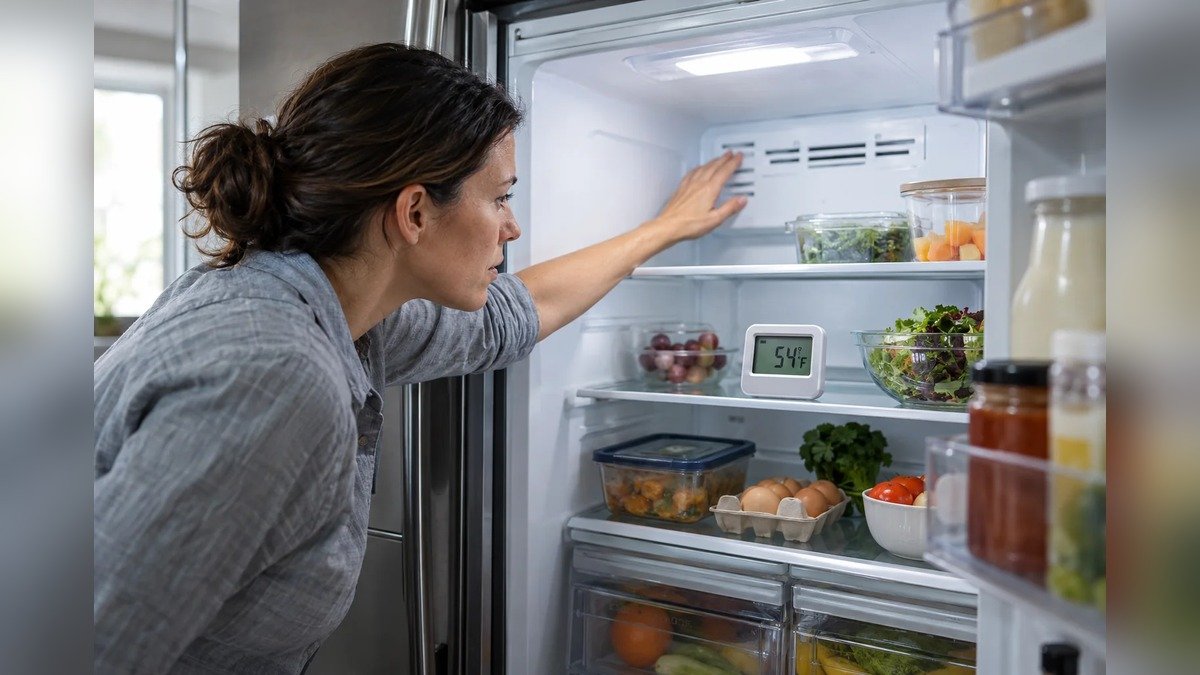
A refrigerator is not cooling when the fresh-food section stays above 40°F or the freezer stays above 0°F, the limits the USDA recommends for food safety.
The same fault appears in several forms. Examples include a warm refrigerator with a cold freezer, a warm refrigerator and freezer, cooling that fails after a power outage and cooling that fails only at intervals.
What if the freezer is cold but the refrigerator is warm?
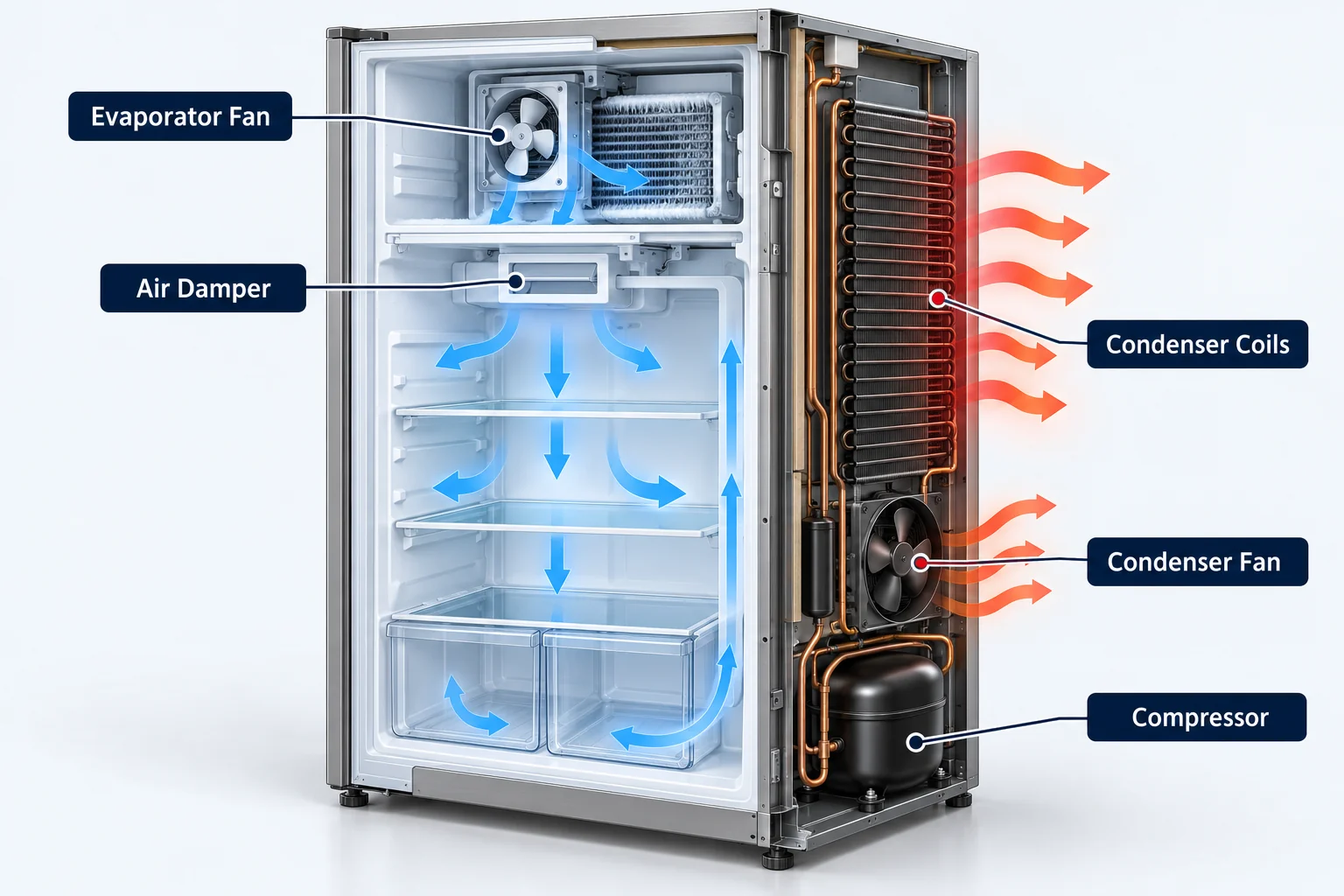
A cold freezer with a warm refrigerator points to blocked airflow, a stuck damper or a failed evaporator fan. In frost-free models, the freezer side supplies cold air to the fresh-food section. A warm freezer with a working refrigerator is a separate fault, covered in refrigerator freezer not freezing.
What if the refrigerator is not cooling well?
A refrigerator that runs but stays above 40°F is not cooling well, which points to airflow, fan, defrost or coil causes. Each of these causes is explained in the sections below.
What if the refrigerator is not cooling at all?
A unit with no light, no fan sound and no compressor sound has a power or control fault. The checks are covered in refrigerator not running or starting.
What if the refrigerator cools only sometimes?
Intermittent cooling points to a fan, relay, temperature sensor or control board fault. Each of these causes is explained in the sections below.
What if the refrigerator is new or was just moved?
A new or moved refrigerator needs time to stabilize before its temperature is judged. Follow the settling time stated in the manufacturer manual before testing.
What Should You Check First When a Refrigerator Is Not Cooling?
Six first checks resolve many cooling complaints before any part is replaced.
Safety notice: Unplug the refrigerator before touching any part behind a panel. Stop at the checks below. Electrical testing, refrigerant handling and sealed-system work belong to a technician.
- Confirm power at the outlet and the circuit breaker, including any GFCI outlet.
- Verify the temperature setting on the dial or control panel against the manual.
- Turn off demo mode or any display-only mode, which brands name differently.
- Close both doors fully and clear shelves, bins and packaging from the door seals.
- Clear the air vents in both compartments and remove overpacked items.
- Read an appliance thermometer on a middle shelf after the doors have stayed closed for several hours.
Record each result, because the pattern identifies the cause in the next section. The ideal refrigerator temperature settings show the correct setpoints for the dial.
How do you check the breaker and the outlet?
Reset the breaker, press the test and reset buttons on any GFCI outlet and confirm that the refrigerator light and fans come on. Plug a small lamp into the same outlet to confirm that the outlet has power.
What is demo mode?
Demo mode keeps the display and lights on while the cooling system stays off. The manual explains how to turn the mode off, and brands name the mode differently.
How long should you wait before reading the thermometer?
Wait for the settling time stated in the manual before judging the reading. A refrigerator that was recently opened, loaded or moved needs time to recover.
How Do You Tell Which Part Failed?
The pattern of what runs, what is cold and what is frosted identifies the failed part. The table below matches seven common patterns to their likely causes. Each cause is explained in the next section.
| Observation | Likely cause |
|---|---|
| No light, no fan sound, no compressor sound | Power fault or control board |
| Compressor clicks, then stops | Start relay or compressor |
| Freezer cold, fresh-food section warm | Blocked vent, stuck damper or evaporator fan |
| Thick frost on the freezer back wall | Defrost system |
| Frost or moisture along the door edges | Door seal |
| Compressor runs for long periods, rear grille dusty | Dirty condenser coils |
| Erratic display or random cycling | Control board or temperature sensor |
Patterns can overlap, so confirm a cause with the checks in the next section before buying a part. The six questions below narrow the pattern.
Is the compressor running?
A running compressor produces a steady hum, and silence or repeated clicking points to a start or control fault. The compressor sits at the rear or the bottom of the unit. A compressor that runs for long periods without cooling points to dirty coils or a sealed-system fault.
Are the fans running?
Two fans move air, the evaporator fan behind the freezer back panel and the condenser fan near the compressor. Weak airflow at the vents or a rattling sound points to a fan fault.
Is there frost, and where is it?
Thick frost on the freezer back wall points to the defrost system, and frost along the door edges points to the door seal. A frost-free refrigerator should not build thick frost on the back wall.
Is the freezer cold while the refrigerator is warm?
This pattern points to blocked airflow, a stuck damper or an evaporator fan fault, because cold air is not reaching the fresh-food section. Check the vents first.
Is the rear of the unit dusty?
A dusty rear grille or coil area points to dirty condenser coils, which can be cleaned at home. Dust, pet hair and lint reduce heat release.
Is the display erratic or the cycling random?
Erratic displays and random cycling point to the control board or a temperature sensor. Rule out demo mode and the power supply first.
Which Causes Can You Test and Fix at Home?
Eight causes can be tested or fixed at home, and each carries a difficulty label.
Are Dirty Condenser Coils the Cause?
Dirty condenser coils release heat poorly, so the compressor runs longer and the cabinet warms. Dust, pet hair and lint, for example, coat the coils behind the bottom grille or rear panel. Inspect the coils with the unit unplugged. Clean them with a vacuum brush attachment, following the manual. Difficulty: easy. Full steps are in refrigerator condenser coil cleaning.
Are the Fan Motors Failing?
A failed evaporator or condenser fan stops air from moving across the coils, which warms the cabinet. Signs include weak airflow, a rattling or squealing fan and a warm refrigerator with a cold freezer. Confirm that each fan turns freely and that ice, packaging or debris does not block the blades. Replace a motor that stays seized after the obstruction is removed. Difficulty: moderate. Details are in refrigerator fan motors.
Is the Defrost System Failing?
A failed defrost system lets frost bury the evaporator coils and block airflow. The sign is a thick frost layer on the freezer back wall. A full manual thaw with the unit unplugged tests the theory: cooling that returns and then fades again points to the defrost heater, the defrost thermostat or the defrost control. Replace the failed defrost part after testing. Difficulty: moderate. The causes and tests are in refrigerator frost and defrost problems.
Is the Door Seal Leaking?
A worn door seal lets warm air in, which causes frost, sweating and long run times. Close a paper strip in the door and pull it out. The seal is sound if the strip resists. Replace a seal that is torn, hardened or loose. Clean a dirty seal with mild soap and water first. Difficulty: easy to moderate. The test and replacement are in refrigerator door seal and gasket.
Is the Damper Stuck?
A stuck damper blocks cold air from reaching the fresh-food section while the freezer stays cold. Ice and debris, for example, can jam the damper flap. Clear the vents and inspect for blockages. Replace a damper that stays closed or is cracked. Difficulty: moderate. See refrigerator thermostat, thermistor and damper problems.
Are the Thermostat or Temperature Sensor Faulty?
A faulty thermostat or temperature sensor sends the wrong signal, so the compressor and fans cycle incorrectly. Signs include temperature swings and cooling that varies between days. Compare the thermometer reading with the dial setting. A technician confirms the part with a meter and the manufacturer specifications. Replace the part if the readings fall outside the specification. Difficulty: moderate. The guide linked in the damper section covers both parts.
Is the Control Board Failing?
A failing control board causes dead displays, random cycling or no cooling when every other part works. Rule out power, settings and demo mode first. A power reset clears some temporary faults. Replace the board only after a technician confirms the fault. Difficulty: technician-assisted. Signs and options are in refrigerator control board failure signs.
Is the Start Relay Failing?
A failed start relay prevents the compressor from starting, which produces repeated clicking and a warm cabinet. Listen for a click every few minutes without the compressor running. A technician tests the relay with a meter. Replace the relay if it fails the test. Difficulty: moderate. Testing and replacement are in refrigerator start relay.
Which Causes Need a Technician?
Compressor failure and sealed-system faults need a technician, because refrigerant handling requires EPA Section 608 certification.
Two causes belong to this group:
- A failed compressor, which stops the sealed system from circulating refrigerant
- A refrigerant leak in the sealed system
Never vent refrigerant, add refrigerant or cut refrigerant lines.
What does a failed compressor look like?
A failed compressor hums without starting, trips the overload protector or runs without producing cold. The signs and testing limits are in refrigerator compressor problems.
What does a sealed-system leak look like?
A sealed-system leak lets the unit run for long periods without ever getting cold, because refrigerant no longer circulates normally. The line between home work and technician work is explained in refrigerator repair: DIY or professional.
Repair estimates for these two causes are usually higher than for home repairs, so the repair-or-replace decision starts here.
Is It Worth Repairing or Replacing a Refrigerator That Is Not Cooling?
Repair suits a failed part on a younger refrigerator, and replacement suits a sealed-system fault on an older one. Age, fault type and repair price decide the outcome. Replace the refrigerator when the repair quote approaches the price of a comparable new unit. The full method is in repair or replace a refrigerator. Cost drivers are listed in refrigerator repair cost.
How does the age of the refrigerator affect the decision?
A refrigerator near the end of its typical lifespan is a weaker repair candidate than a younger unit. Each repair on an old unit buys less remaining service.
How does the failed part affect the decision?
A failed low-cost part, such as a door seal or a fan motor, favors repair, and a failed compressor or sealed system favors replacement. Ask the technician for a written quote that separates parts and labor.
What Should You Do With the Food in the Meantime?
Keep the doors closed and move perishable food to a cooler with ice until the refrigerator returns to 40°F or below. The hold times for a closed refrigerator and freezer are in how long food stays safe in a refrigerator without power.
How do you keep perishable food cold?
Pack perishable food into coolers with ice and keep the refrigerator doors closed. Keep raw meat, poultry and fish apart from ready-to-eat food.
How do you check the food afterwards?
Discard perishable foods that stayed above 40°F for 2 hours or more, based on FDA guidance. Check food with a thermometer and never taste food to judge safety.
How Do You Stop a Refrigerator From Losing Cooling Again?
Five habits reduce repeat cooling faults.
- Clean the condenser coils on the schedule in the manual, as shown in refrigerator condenser coil cleaning.
- Keep the air vents clear and the shelves loosely packed.
- Inspect the door seals at each coil cleaning, using the paper strip test in refrigerator door seal and gasket.
- Level the refrigerator so that both doors close without help.
- Set the dial using the refrigerator temperature settings.
Record each cleaning and inspection in a log, because the log shows which habit is slipping.
Which Brand and Type Pages Cover Your Refrigerator?
Brand and layout change the parts, the reset steps and the error codes. Use the guide for your brand or type.
By brand:
- GE refrigerator problems
- Frigidaire refrigerator problems
- Whirlpool refrigerator problems
- LG refrigerator problems
- Samsung refrigerator problems
- Kenmore, Maytag and Bosch refrigerator problems
By type:
- French door refrigerator problems
- Side-by-side refrigerator problems
- Top-freezer, bottom-freezer and mini refrigerator problems
What Do People Also Ask About a Refrigerator Not Cooling?
Why is my refrigerator running but not cooling?
Dirty condenser coils, a failed fan, a stuck damper or a sealed-system fault can leave the compressor running while the cabinet stays warm.
Why is my freezer cold but my refrigerator warm?
A blocked vent, a stuck damper or a failed evaporator fan stops cold air from reaching the fresh-food section.
Why is my freezer warm while my refrigerator is cold?
A frosted evaporator, a failed evaporator fan or a stuck damper usually stops cold air from reaching the freezer, as explained in refrigerator freezer not freezing.
Why did my refrigerator stop cooling after a power outage?
An outage can trip a breaker or expose a weak part such as a relay, so check the power and settings first and then read how long food stays safe in a refrigerator without power.
Can a refrigerator that is not cooling be fixed without a technician?
Dirty coils, door seals, blocked vents and settings can be fixed without a technician, but sealed-system faults cannot.
What temperature should a refrigerator be?
The USDA recommends 40°F or below for the refrigerator and 0°F or below for the freezer.
Related refrigerator guides
US and UK refrigerant-work boundary
Home diagnosis must stop before opening, cutting or tapping the sealed refrigerant circuit. In the US, EPA Section 608 certification is required for work that could release refrigerant. In the UK, work on equipment containing F-gas requires the relevant qualification. Refrigerant type and local rules vary, so use a qualified refrigeration technician for sealed-system work.