

Top-Freezer, Bottom-Freezer and Mini Refrigerator Problems: 6 Common Faults, 5 Cooling Checks and 4 Defrost Steps
What Are the Common Problems With Top-Freezer, Bottom-Freezer and Mini Refrigerators?
Six faults are the ones to check first on a top-freezer, bottom-freezer or mini refrigerator.
- The refrigerator or the freezer is too warm
- Frost builds up in the freezer
- A door or a drawer does not seal
- Water collects inside or under the unit
- The unit runs constantly or makes an unusual noise
- A mini refrigerator does not cool as it should
These are symptoms and not faults that belong to one type, and the model number decides the parts and the manual. Built-in and counter-depth refrigerators follow the same method, and the manual for the model states the installation and the service details. This page gives no part numbers or figures from memory.
What makes each type different?
A top-freezer has the freezer above, a bottom-freezer has it below and a mini refrigerator is a small unit, so the layout differs. The manual for the model shows the layout and states whether the model defrosts itself.
Why Is My Top-Freezer, Bottom-Freezer or Mini Refrigerator Not Cooling?
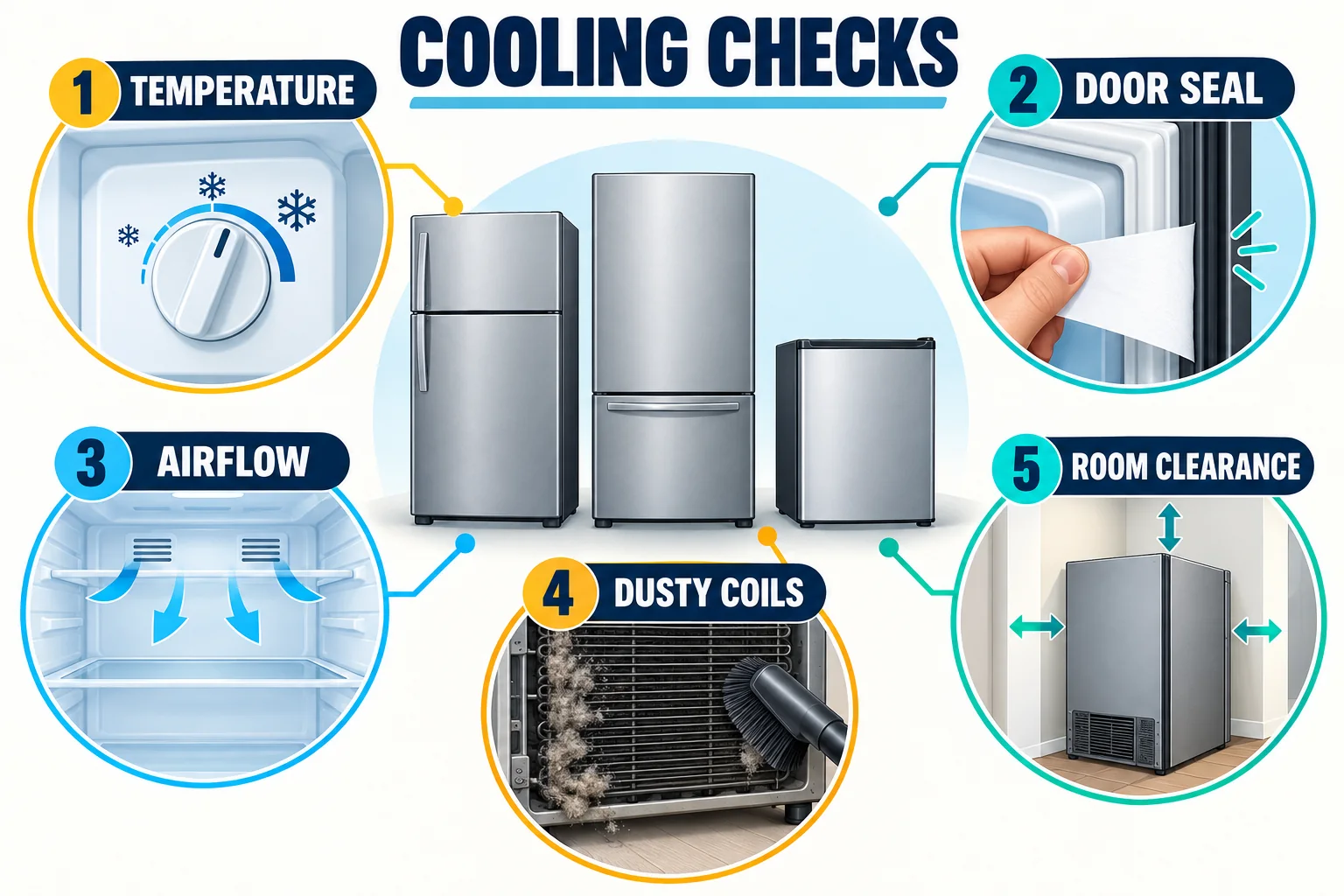
Check the power, the setting, the seals, the airflow and the temperature in order before you look for a fault.
Safety notice: Unplug the unit before touching any part behind a panel, and do not use a damaged or wet outlet or cord. Electrical testing, refrigerant handling and sealed-system work belong to a technician.
Five checks come in order:
- Check that the plug is seated, that the outlet has power and that the breaker has not tripped.
- Check that the temperature setting matches the manual and has not been changed.
- Close the door or the drawer on a strip of paper, and check that the seal grips all the way around.
- Check that nothing blocks the vents, and that the unit has the clearance for airflow that the manual states.
- Read an appliance thermometer in each compartment after the time that the manual states.
The causes and the fixes are in refrigerator not cooling. Difficulty: easy.
Does a mini refrigerator cool the same way as a full size one?
Not always, because some mini refrigerators use a different cooling method, and the manual for the model states which.
Why Does a Mini Refrigerator Not Get Cold Enough?
A mini refrigerator works harder in a warm room or a tight space, so check the room, the clearance and the load first. Keep the unit away from heat and direct sun, give it the clearance that the manual states and avoid overfilling it. A warm load of drinks or food also lengthens the time to cool. A mini refrigerator that never cools after these checks needs a technician or a replacement.
Why does a mini refrigerator run all the time?
A small unit in a warm room or with a full load runs longer, so the room and the load are the first things to check.
Why Does Frost Build Up in the Freezer?
Warm, moist air from a door or a drawer that does not seal builds frost, and a defrost fault can add to it. The causes of frost, with the defrost parts, are in refrigerator frost and defrost problems. Check the seal and the closing of the door or the drawer first, and look at where the frost builds, because the pattern helps the diagnosis.
Can a bottom-freezer drawer that sticks cause frost?
Yes. A drawer that does not close all the way lets moist air in, and the moisture builds up as frost on the cold surfaces. Check the drawer and the seal first.
How Do You Defrost a Freezer That Needs a Manual Defrost?
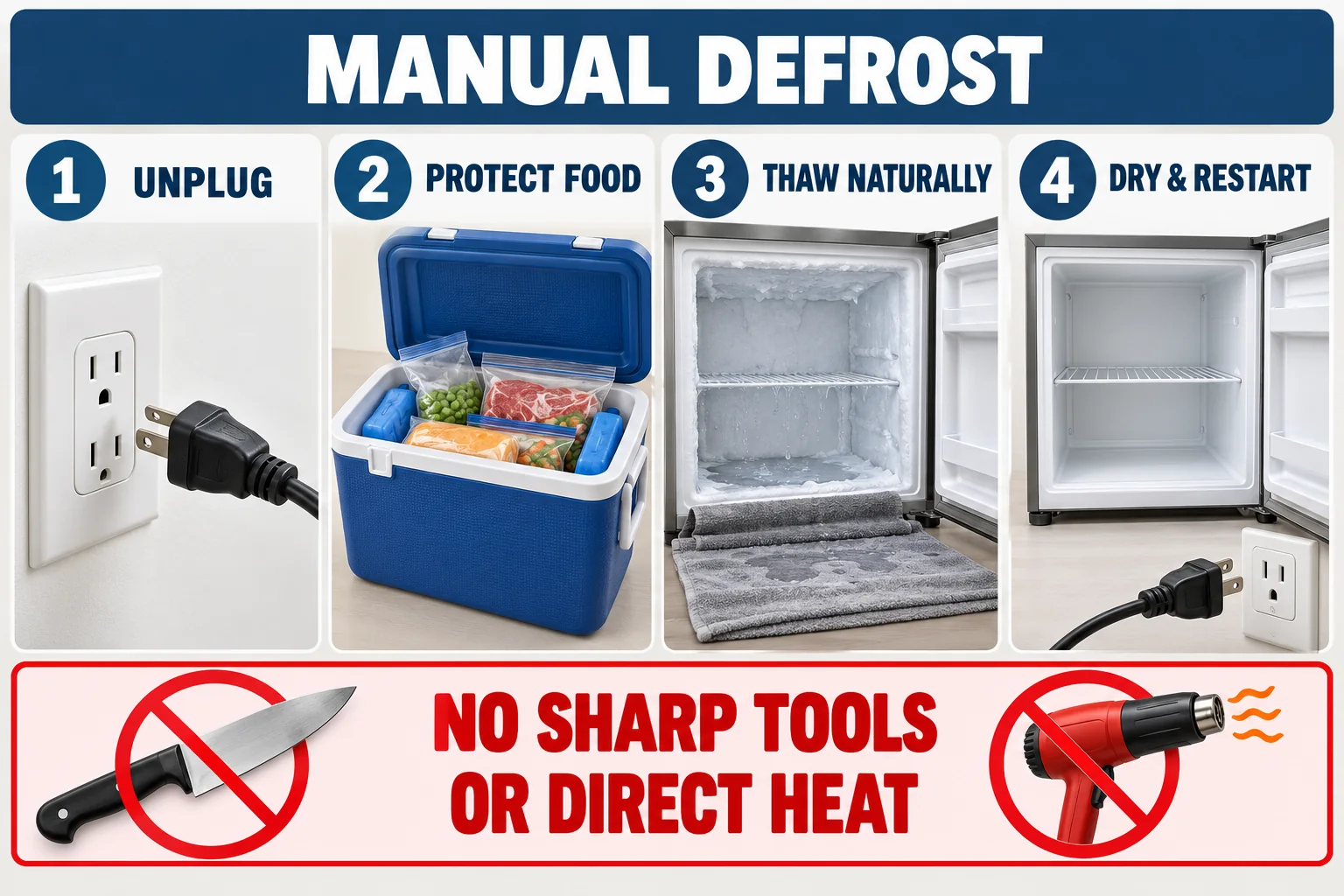
Defrost only a model that the manual says needs it, and let the ice melt without sharp tools or heat.
Safety notice: Unplug the unit before you start, and do not use a knife, a pick, a screwdriver or a heat source on the ice. Keep water away from the plug and the outlet. Electrical testing, refrigerant handling and sealed-system work belong to a technician.
Four steps defrost the freezer:
- Read the manual to confirm that the model needs a manual defrost.
- Unplug the unit, move the food to a cooler and place towels and a tray to catch the water.
- Let the ice melt on its own with the door open, and wipe up the water as it collects.
- Dry the inside, plug the unit in, set the temperature as the manual states and return the food once it is cold.
A model that defrosts itself should not need this, so frost on that model points to a fault. Difficulty: easy.
How often should you defrost?
As often as the manual states for the model, and frost that returns quickly points to a leak or a fault.
Is It Worth Repairing a Top-Freezer, Bottom-Freezer or Mini Refrigerator?
Compare the written quote with the age of the unit and the price of a comparable new one before you repair. The verdict method, with the repair history and the running cost, is in repair or replace a refrigerator. Ask for a quote that names the fault and separates the parts and the labor.
Is a mini refrigerator worth repairing?
Often the quote decides, because a small unit may cost less to replace, so compare the quote with the price of a new one.
What Should You Record Before You Call for Help?
Record the model number, the type, the symptoms and what you checked, because that information speeds the diagnosis. Photograph the label, the seal and any frost or water. Note the room, the setting and the thermometer readings with the times. Note when the fault started and whether it follows a power cut, a move or a change of setting. Keep the purchase record, because warranty terms differ. Ask the warranty provider to confirm the cover in writing, and read the terms for the part and the labor before you book.
When Should You Call a Technician?
Call a technician when the unit will not cool after the checks, frost returns after a defrost or you see damage or burn marks. A fan that does not turn, a compressor that is loud, hot or clicking, an oily residue, water near the wiring and any sealed-system fault need a technician. Stop and unplug the unit if you smell burning. Give the technician the model number, the type, the symptoms and what you checked. Under warranty, call the manufacturer first, because the warranty terms decide who may repair it. Otherwise, ask for a written quote that names the fault.
What Do People Also Ask About Top-Freezer, Bottom-Freezer and Mini Refrigerators?
Why is my top-freezer refrigerator not cooling?
A loose plug, a changed setting, a worn seal, blocked vents or a failed part can stop the cooling, as explained in refrigerator not cooling.
Why is my bottom-freezer drawer frosting up?
A drawer that does not close fully or a worn seal lets moist air in, as explained in refrigerator frost and defrost problems.
Why is my mini refrigerator not getting cold?
A warm room, a tight space or a full load can weaken the cooling, and the manual states how the model cools.
Do I have to defrost a mini refrigerator?
Only if the manual says the model needs a manual defrost, and the steps are in the defrost section.
Is it worth repairing a top-freezer, bottom-freezer or mini refrigerator?
Compare the written quote with the age and the price of a new unit, as explained in repair or replace a refrigerator.

Hi, I’m Ryan, a refrigeration engineer based in the UK Midlands. I’m passionate about engineering, technology, and understanding how things work, especially when it comes to heating, ventilation, air conditioning, and refrigeration systems.
I enjoy the hands-on side of engineering, from working with technical equipment to exploring practical solutions to everyday challenges. For me, engineering is more than just a profession; it’s about problem-solving, continuous learning, and developing valuable technical skills.
I also enjoy sharing glimpses of the engineering world through my Instagram page, @hvac.razza, where I showcase tools, equipment, and aspects of HVAC work.
Outside the technical side of things, I value genuine connections, meaningful conversations, and opportunities to learn from others. I’m always interested in connecting with people who share an appreciation for technology, practical skills, and personal growth.