
Refrigerator Disposal: 5 Removal Options, 5 Preparation Steps and 4 Provider Questions
What Are Your Options for Disposing of an Old Refrigerator?
Five options cover most cases, and the right one depends on whether the refrigerator works, where you live and what you are buying. Before you dispose of it, check whether a repair makes sense, as repair or replace a refrigerator explains. This page gives no rules, rebates or fees from memory, because the area and the date set them.
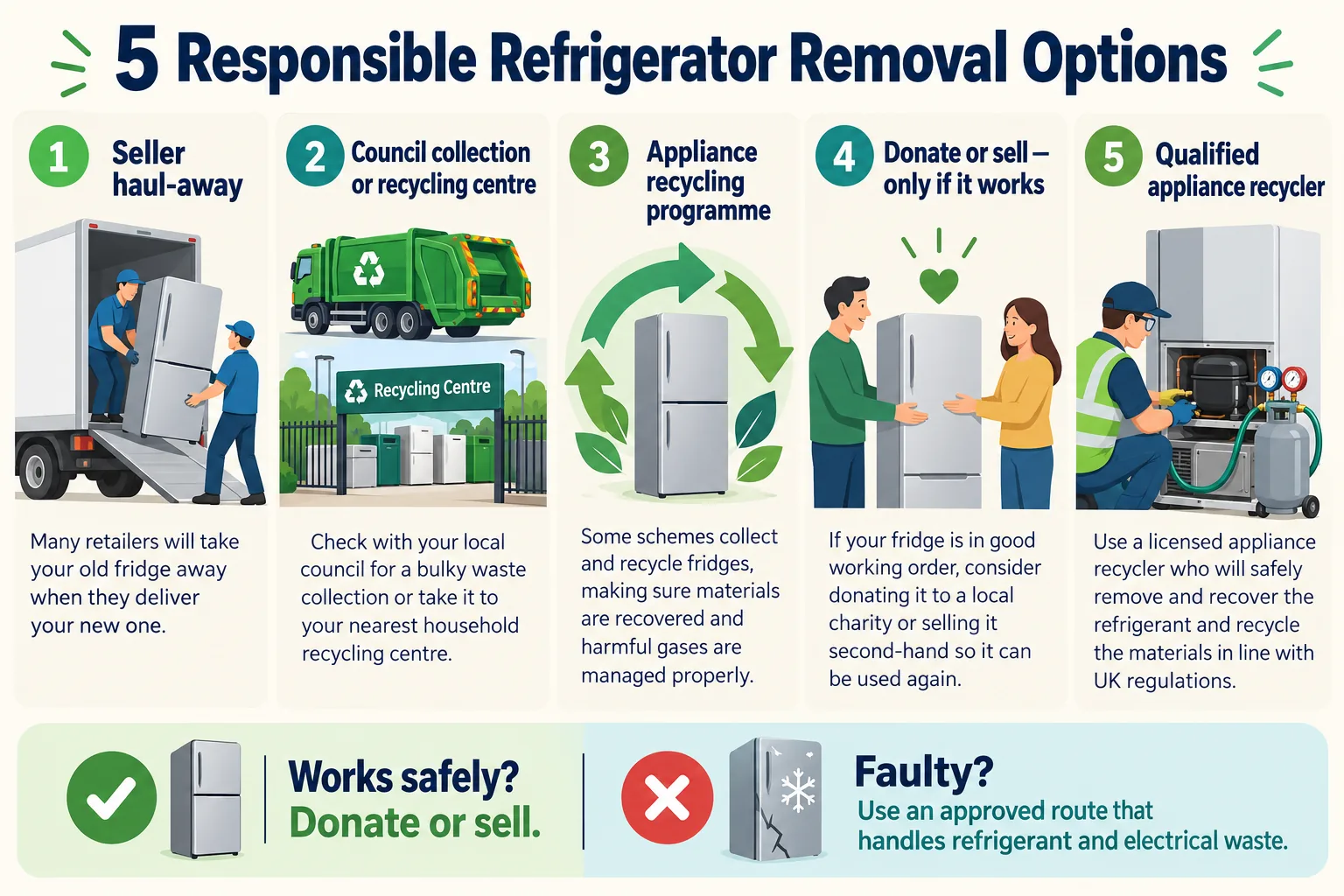
The five options are:
- A haul-away from the seller when you buy a new refrigerator
- A local bulk pickup or a recycling center
- An appliance recycling program, such as one run by a utility
- A donation or a sale, if the refrigerator works
- A qualified scrap or appliance recycler
Is the refrigerator worth repairing before you dispose of it?
Not always, and the verdict method in repair or replace a refrigerator decides it. Check the age, the repair history and the written quote before you book a removal.
Which Disposal Option Suits Your Refrigerator?
A refrigerator that works can be donated or sold, and one that does not needs an approved route that can handle refrigerant and electrical waste. In the UK, check the local council’s current refrigerator service or use a retailer’s WEEE take-back route when buying a replacement. The GOV.UK retailer take-back guidance was checked on 27 October 2026. Acceptance and collection arrangements can change locally, so confirm them before moving the appliance.
Can you put a refrigerator out with the household trash?
Check the local rules first, because the refrigerant and other parts need handling that household trash does not give. Do not leave a refrigerator at the curb until you know that the rules allow it.
How Do You Prepare a Refrigerator for Removal?
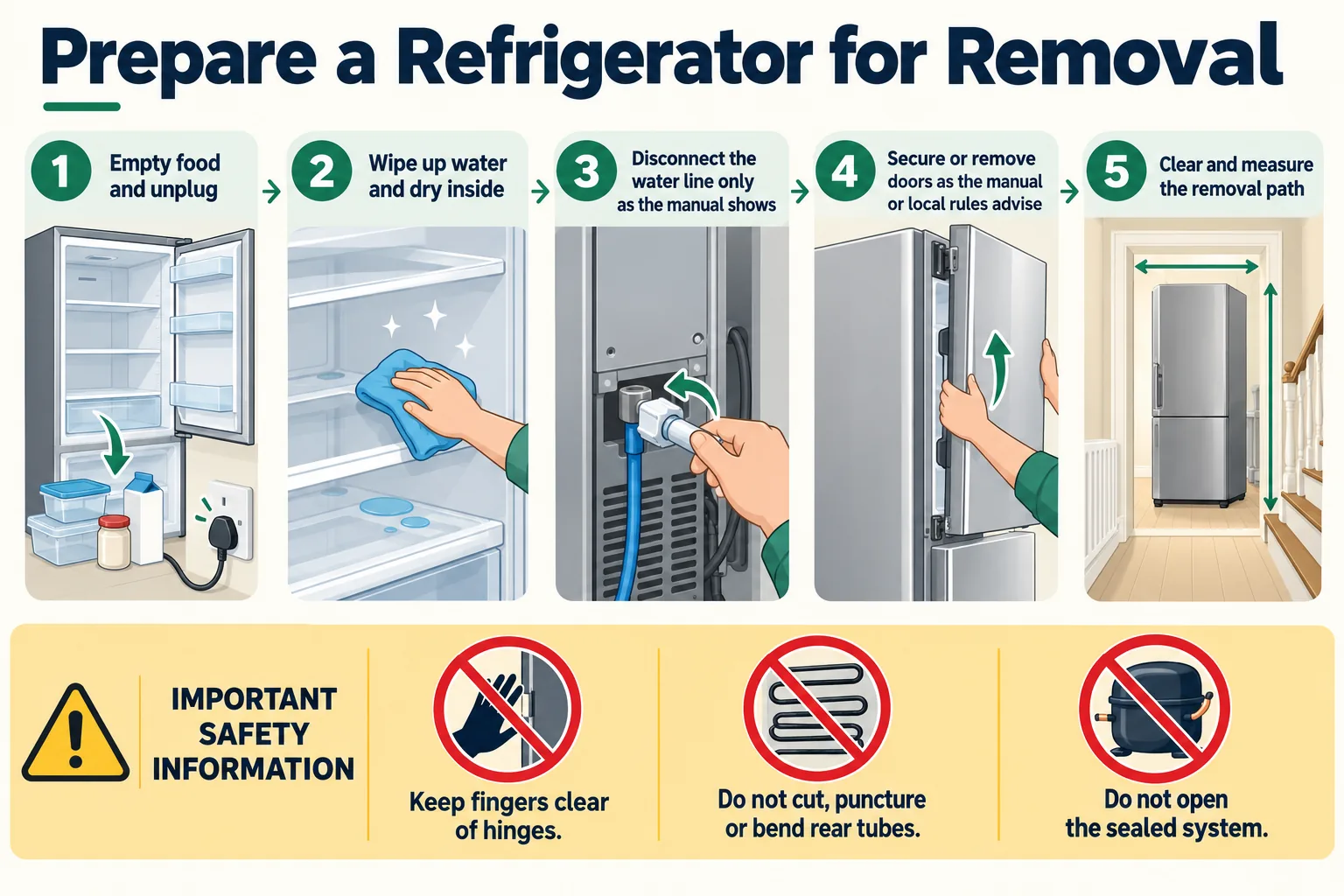
Empty it, unplug it, secure the doors and clear the path before the removal team arrives.
Safety notice: Unplug the refrigerator, and keep fingers clear of the doors and the hinges. Do not cut, puncture or bend the tubes at the back, and do not open the sealed system. Electrical testing, refrigerant handling and sealed-system work belong to a technician.
Five steps prepare the refrigerator:
- Empty the refrigerator of food, and unplug it.
- Wipe up any water, and dry the inside.
- Disconnect any water line only as the manual shows.
- Secure or remove the doors as the manual or local rules advise.
- Clear and measure the path for the removal team.
Difficulty: easy for the preparation, and moderate if you move the refrigerator yourself.
Why secure the doors before the refrigerator leaves the house?
A door left on a discarded refrigerator can trap a child, so secure or remove the doors as the manual or local rules advise.
How Do You Choose a Removal Provider?
Ask four questions before you book, and keep the answers with the receipt. Fees, credits and availability vary by council, retailer and date, so confirm the current charge directly with the provider before booking.
- Does the provider recover the refrigerant and recycle the parts?
- What does the removal cost, and what does the price include?
- Does the team take the refrigerator from the room or only from the curb?
- Does the provider give a receipt or a record of the removal?
Compare the removal cost with the cost of a repair, as the cost breakdown in refrigerator repair cost shows. Difficulty: easy.
Is removal free with a new refrigerator?
It depends on the seller, so ask when you buy and get the terms in writing.
Can You Get a Rebate for Recycling an Old Refrigerator?
Some programs pay or credit for a refrigerator, but the terms depend on the area and the date, so check the current council, retailer or energy-supplier program. Do not rely on a rebate until the provider confirms that the program is open and that the exact appliance qualifies.
Does a rebate change the repair or replace decision?
It can, so weigh it against the repair quote, as the figures in refrigerator repair cost show.
What If the Refrigerator Still Works?
A working refrigerator can be donated or sold if it is clean, cold and safe, so check it before you offer it. Read an appliance thermometer in each compartment, look at the seals and the cord, and wipe the inside. Tell the buyer or the charity about any fault, and ask what condition they accept.
Should you sell a refrigerator that has a fault?
Only with the fault stated clearly, because a buyer needs the facts. A fault in the sealed system or the wiring is best left to a recycler.
What Should You Record Before You Dispose of a Refrigerator?
Record the model number, the date of the removal and who took the refrigerator, because the record can matter later. Photograph the label and the receipt, and note the date and the reference of the pickup booking. Keep any rebate paperwork and the written terms of the removal. If the refrigerator is under warranty or a recall, contact the manufacturer before you dispose of it, because the terms can decide the options.
When Should You Call a Technician or a Recycler?
Call a qualified recycler for a refrigerator that must go, and a technician if it leaks oil or smells of burning. A damaged tube at the back, an oily residue and any sealed-system fault need a technician, and you should not cut or open anything yourself. Stop and unplug the refrigerator if you smell burning. Ask the recycler to confirm in writing that the refrigerant will be recovered. Give the provider the model number and the condition of the refrigerator.
What Do People Also Ask About Refrigerator Disposal?
How do I get rid of an old refrigerator?
Use a seller haul-away, a local pickup, a recycling program, a donation or a recycler, as the five options show.
Is it worth repairing an old refrigerator before disposal?
Check the age, the repair history and the quote, as explained in repair or replace a refrigerator.
How much does it cost to get rid of a refrigerator?
The cost depends on the provider and the area, so compare quotes, and compare repair costs in refrigerator repair cost.
Can I put a refrigerator in the trash?
Not without checking the local rules, because the refrigerant needs recovery by a qualified person.
How do I get a rebate for recycling my refrigerator?
Check the current program for your area, because the terms and the dates vary, and the sourced details are in the rebate section.
US and UK refrigerator disposal routes
US: use a retailer, local authority or recycler that follows EPA refrigerant-recovery rules; do not cut refrigerant lines or remove the compressor. UK: retailers must offer take-back for like-for-like electrical equipment, and local council or authorised WEEE services can accept refrigerators. Verify local collection terms before moving the appliance.
- US EPA consumer disposal guidance
- US EPA safe disposal rules
- UK retailer WEEE take-back
- UK F-gas fridges and freezers

Hi, I’m Ryan, a refrigeration engineer based in the UK Midlands. I’m passionate about engineering, technology, and understanding how things work, especially when it comes to heating, ventilation, air conditioning, and refrigeration systems.
I enjoy the hands-on side of engineering, from working with technical equipment to exploring practical solutions to everyday challenges. For me, engineering is more than just a profession; it’s about problem-solving, continuous learning, and developing valuable technical skills.
I also enjoy sharing glimpses of the engineering world through my Instagram page, @hvac.razza, where I showcase tools, equipment, and aspects of HVAC work.
Outside the technical side of things, I value genuine connections, meaningful conversations, and opportunities to learn from others. I’m always interested in connecting with people who share an appreciation for technology, practical skills, and personal growth.